

Boots for women head toward a $98.25 billion market by 2030, and boot-heritage brands such as Dr. Martens and UGG show the margin and scale a focused founder can chase.
Boots for Women Sit in a Market Big Enough for a Focused Bet

Founders at Series A need a market where a small share still builds a real company, and boots for women meet that test. 360iResearch estimates the women’s boots market at $77.73 billion in 2023 and projects it will reach $98.25 billion by 2030, a 3.40% compound annual growth rate. A 1% share of the 2030 figure equals roughly $983 million in sales. The growth rate is modest, so you will win by taking customers from incumbents, not by riding a rising tide.
Trend data shows where customers are moving. Trendalytics’ 2026 footwear forecast reports year-over-year search growth of 455% for zebra print boots and 326% for harness boots. It also notes rising interest in open-toe and split-toe boots after street-style attention at CPHFW. The page does not state that these figures cover women’s styles only, and search growth does not equal sales. Treat them as a signal for what to test, not as a forecast.
Speed matters here. A founder who tests one trend-led boot in a small batch learns within a single season whether search interest turns into purchases. A founder who commits a full range to a trend risks a season of unsold stock. Start with one hero style, and let sell-through data, not search charts, decide the second.
The same discipline applies to your story. Pick the one attribute your hero boot does best, such as fit, shaft height, or sole comfort, and build your product page, sizing guide, and returns policy around it. A clear promise on one attribute gives a small team something specific to test, which a vague claim about style does not.
Boots for Women Reward Brands That Protect Price
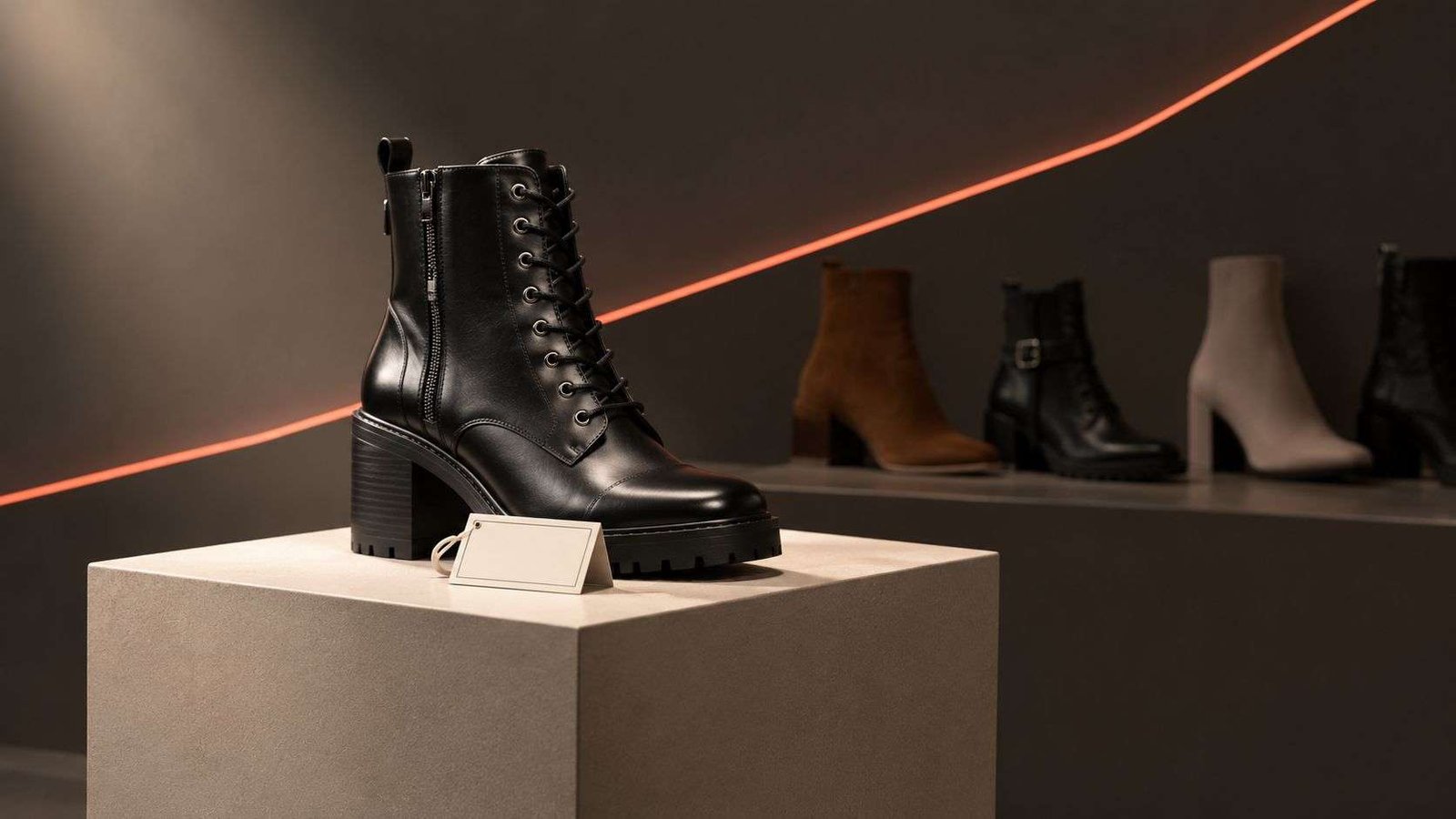
Dr. Martens shows what pricing power looks like in boot-heritage footwear. In fiscal 2026 (year ended March 2026), the company reported revenue of £764.9 million, down 2.9%, and adjusted EBIT of £79.3 million, up 30.6%. Gross margin rose 120 basis points to 66.2%, and non-marketing operating costs fell 6.0%. My calculation puts adjusted EBIT margin near 10.4%, which is not a company statement.
Compare that gross margin with the other footwear companies in this series. On reported 62.8% for 2025, Deckers reported 57.7% for fiscal 2026, adidas reported 51.6%, and Nike reported 42.9%. Dr. Martens leads the group even though its sales fell. Revenue and profit can move in opposite directions when a brand protects its price and cuts cost.
The channel data supports that reading. Dr. Martens reports Americas full-price direct-to-consumer revenue up 14% and APAC full-price direct-to-consumer revenue up 15%, while off-price pairs in US wholesale fell 31%. The company sold fewer discounted pairs and more full-price pairs, and its margin rose. For a new boots for women brand, that pattern argues for holding price from launch instead of discounting to move stock.
Run one check this week. Split your sales into full-price and discounted pairs, and calculate gross margin for each. If discounted pairs carry most of your volume, you are buying revenue with margin, and no financing round fixes that for long. Margin discipline matters in boots for women, where you pay for materials and construction before you spend a dollar on marketing.
Boots for Women Need a Plan Beyond the Boot
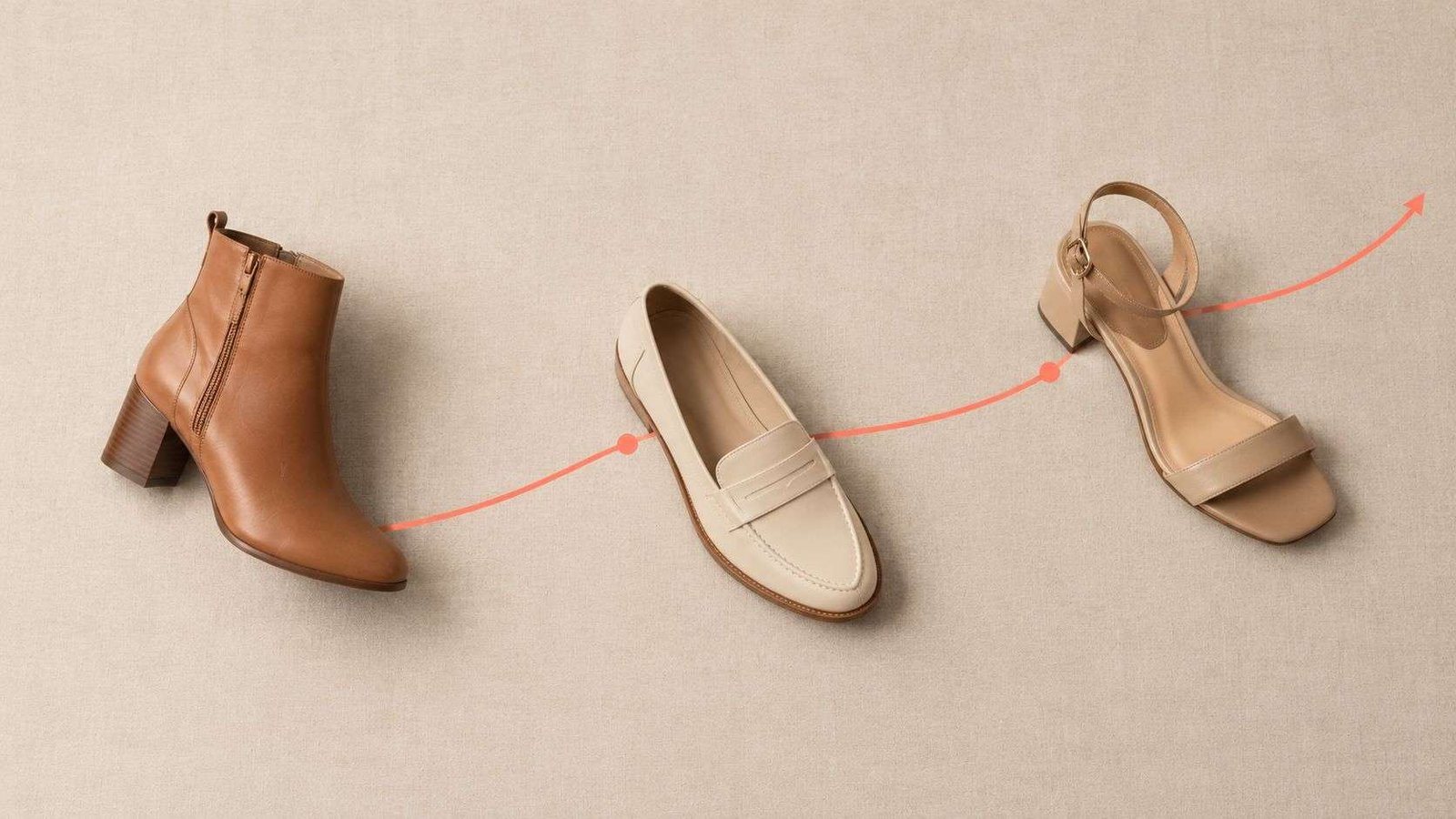
UGG reported fiscal 2026 net sales of $2.74 billion, up 8.2%, and Deckers guides to mid-single-digit growth for the brand in fiscal 2027. Coverage of Deckers’ fourth quarter credits direct-to-consumer strength and newer categories, including sneakers, sandals, and clogs for UGG’s 9.2% growth to $408.6 million that quarter. A brand that built its name on one boot now grows by extending into adjacent shoes.
Dr. Martens points the same way. Its fiscal 2026 results call shoes the standout performer, with shoe sales up 19% while group revenue fell 2.9%. The coverage gives no boot figure, so this article does not claim boot sales fell. The takeaway is narrower: a boot anchor earns the customer, and adjacent shoes add growth.
Apply that sequence. Launch one boot, such as a leather ankle boot in black or brown, and prove it sells at full price. Then add a loafer, a sneaker, or a sandal that the same customer wears in the months she skips boots. You extend your sales calendar without leaving the customer you already know. This approach also lowers your risk, because every new product reaches an audience that already trusts your boots for women.
Here is a hypothetical example of the math. Suppose your boot retails at $180 and lands at $60, a 67% gross margin that sits near Dr. Martens’ 66.2%. If acquiring a customer costs $45, the first order leaves $75 of gross profit after acquisition, before returns, shipping, and overhead. If that customer then buys a $120 loafer that lands at $40, you add $80 of gross profit with no new acquisition cost. These numbers are illustrative, so replace them with your own and rerun them every month.
A 12-Month Playbook for Boots for Women

Turn the evidence into a plan for boots for women that you can run before your next board meeting.
- Pick one hero boot. Choose a single silhouette, such as an ankle boot, and sell it in two or three colors. Skip new silhouettes until it sells through.
- Set a margin floor. Target gross margins in the 57.7% to 66.2% range that Deckers, On, and Dr. Martens report. If you sit below it, fix cost of goods and returns first.
- Hold your price. Track the share of full-price pairs each month. Dr. Martens grew full-price direct-to-consumer revenue 14% to 15% in two regions while off-price wholesale pairs fell 31%.
- Test one trend in a small batch. Use the zebra print and harness boot search growth as test ideas, and size the batch so a miss costs you less than a month of runway.
- Add one adjacent shoe. Introduce a loafer, sneaker, or sandal only after your hero boot earns repeat buyers.
- Review monthly. Track gross margin, full-price share, and repeat purchase rate in one dashboard. Stop any experiment that misses its target for two straight months.
Each step raises margin, proves loyalty, or protects cash. A Series A budget has room for little else, and the brands above show that discipline compounds.
Before you place a production order, answer three questions in writing. What gross margin will this boot earn at full price? How many pairs must you sell at full price to cover the order? What will you do with unsold pairs that does not involve a deep discount? A founder who answers these questions before the order ships protects runway, and a founder who answers them after the stock arrives protects only excuses. Use the same three questions for every new style of boots for women you add.
Boots for women reward founders who launch one hero boot, hold its price, and earn the customer before adding a second shoe. Pick the boot, protect the margin, and let repeat buyers fund the range.
Written by Genzwalk.com
Sources
- 360iResearch: Women’s boots market (via MarketResearch.com)
- Trendalytics: 2026 footwear trends and market forecast
- World Footwear: Dr. Martens returns to profit growth in FY 2026
- FashionUnited: Deckers Brands FY26 net sales (UGG and HOKA)
- MetaTrader News: Deckers Q4 earnings and UGG strength
- On Holding: fourth quarter and full year 2025 results (Business Wire)
- World Footwear: adidas 2025 record revenue
- Nike: Fiscal 2026 fourth quarter and full year results