Genz Walk

Uncategorized

 White Sneakers Women Founders Should Buy: The Series A Case

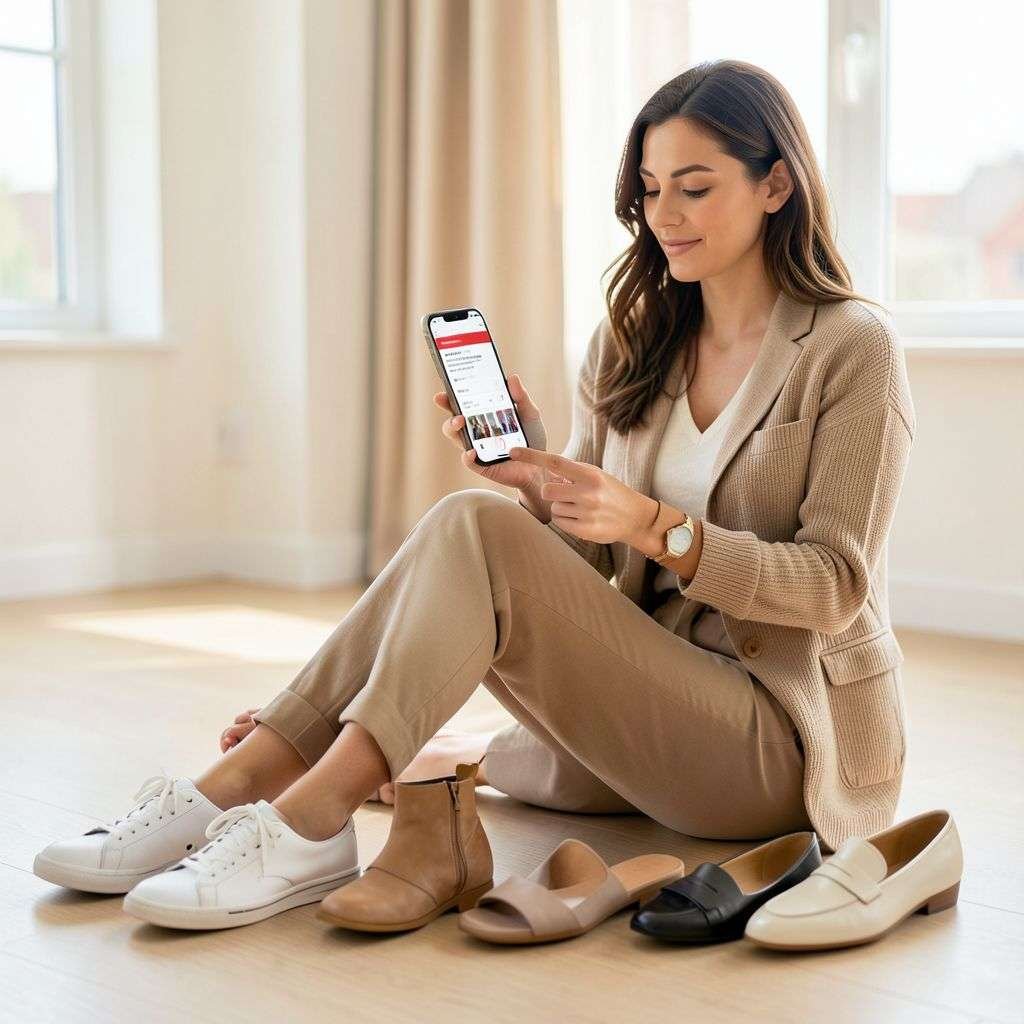
Series A founders trade time for traction every day, so remove one daily decision by buying white sneakers women can wear from the first meeting to the last flight. White Sneakers Women Founders Choose Cut Decision Time Speed is the currency of a Series A company. Every decision you automate leaves more room for hiring, product, and fundraising. White sneakers women own in a single good pair match trousers, dresses, and denim, so the footwear decision disappears. The best white sneakers women can wear with a blazer in the morning and a hoodie at night serve both roles without a swap. The market points the same way. Future Market Insights describes white sneakers as moving from a trend-led fashion item to a core wardrobe category, because casual footwear now earns acceptance in professional, social, and lifestyle settings. That shift matters because a founder’s calendar mixes investor meetings, team standups, and travel. One pair that covers all three saves packing time and second-guessing. chimba Run a quick calculation, and treat it as an assumption rather than a study. Suppose you spend two minutes each workday choosing shoes, and you work 250 days a year. That adds up to 500 minutes, or about eight hours, on a trivial choice. A single versatile pair cuts that cost toward zero. Eight hours equals a full workday you can give to customer calls. I will not claim that white sneakers women wear to pitch meetings change how investors judge you. I found no research that measures that effect, so count the benefit as time saved, not status gained. The ROI Math Behind White Sneakers Women Wear Daily ROI starts with cost per use. Take a hypothetical pair that costs $150 and gets 200 wears in its first year. That works out to $0.75 per wear. A $60 pair that looks too worn after 50 wears costs $1.20 per wear. The numbers are illustrative, but the formula is real: divide price by wears before you compare price tags. Cost per wear favors white sneakers women wear weekly over trend pairs that sit unworn. Prices vary widely. ASINsight tracked 3,241 products in Amazon’s “white sneakers for women” results in February 2026, and the ten top sellers averaged $20.86. Cheap pairs exist in volume, so the sticker price cannot guide your choice. The wear count decides. asinsight Repair and care lower the denominator in your cost-per-wear formula. Veja’s in-house cobbler restores worn heels, and a routine of brushing, wiping with mild soap, air drying, and conditioning keeps leather from cracking. Founders who budget for upkeep choose white sneakers women can repair instead of replace. The takeaway: Choose the pair you can wear 200 times, not the one you abandon after 20. Real Examples Behind White Sneakers Women Buy: Veja and Stan Smith Veja shows how a sneaker company can run lean. Co-founder Sébastien Kopp says a big-brand pair spends about 70% of its cost on advertising and communication and only 30% on materials and production. According to Kopp, Veja skips advertising, pays five to seven times more to produce a pair, and still reaches the same shelf price as the big brands. He adds that the company grows without investors, stock, or advertising and employs more than 428 people. interview veja co founder sebastien kopp +2 The growth numbers come from outside the company too. A Northeastern University case study puts Veja’s 2017 revenue at $21 million and notes that it had sold three million pairs by then. A later Yahoo profile reports that Veja has sold more than 12 million units without advertising spend. Series A founders can take away the unit-economics lesson: spend where the customer feels the product. Veja sells sneakers in many styles, so treat it as a capital-efficiency example, not proof about one color. When you compare white sneakers women find at different prices, ask where the money goes: materials or advertising. northeasternyahoo Adidas shows the demand side. The Stan Smith had sold about 22 million pairs by 1988, and later counts range from 30 to 40 million depending on the source. Adidas paused production in 2011, resumed it in 2014, and the shoe still sells, which suggests demand for a simple white sneaker outlasts any single season. The Stan Smith is unisex, so treat it as evidence about the category, not one gender. Simple designs make a safer pick when you shop for white sneakers women can wear for years. The Limits of White Sneakers Women Wear to Work White leather shoes are a popular choice because of their clean, elegant, and versatile appearance. They can easily complement casual outfits, formal clothing, and everyday styles. However, one common drawback of wearing white leather shoes is that they tend to pick up dirt, dust, and stains quickly. Regular walking, outdoor activities, and exposure to polluted surfaces can make them look dirty and dull. Even minor marks can become noticeable on white footwear, which is why proper care and regular cleaning are essential. Another important factor to consider is sunlight exposure. Keeping white leather shoes under direct sunlight for extended periods can cause the material to become discoloured or develop a yellowish appearance over time. Excessive heat may also affect the leather’s texture and overall quality. Therefore, storing your shoes in a cool, dry place away from direct sunlight can help maintain their original colour and appearance. Match the material to the care you will actually do. Leather needs gentle wiping and conditioner, while canvas tolerates more water. When you choose white sneakers women will actually keep clean, pick the material whose routine you will follow. prohousekeepers Treat market claims with care. Several pages in my search results cited sharp first-quarter 2026 sales jumps for women’s white sneakers, yet none named a verifiable report or author, so I excluded them. Treat any growth percentage without a named source as noise. The sources I kept have limits too: Veja’s economics come mainly from its co-founder, and Stan Smith sales counts differ between references. Buy

 White Sneakers Women Founders Should Buy: The Series A Case Read More »
Why Series A Founders Should Build Heel Sandals for Girls

Heel sandals for girls sit inside a women’s sandal market that research firms value at anywhere from roughly $18 billion to $29 billion, and founders who design them around podiatrist limits instead of trend cycles will own a trust advantage that rivals skip. Estimates for 2025 run from $18.51 billion to $28.7 billion.  Heel Sandals for Girls Sit Inside a Large, Growing Market Series A founders back categories with evidence, so start with size. Three research firms publish women’s sandal forecasts, and the numbers disagree. LP Information projects growth from $18.51 billion in 2025 to $23.91 billion in 2031, a 4.4% annual rate. Wiseguy Reports values 2025 at $28.7 billion and projects $40 billion by 2035, a 3.4% annual rate. Data Horizzon values 2024 at $18.7 billion and projects $26.8 billion by 2033, a 4.1% annual rate.  The spread between $18 billion and $29 billion carries its own lesson. The firms draw category boundaries differently, so no single figure deserves blind trust. All three still point the same direction: steady growth in the low-to-mid single digits. One limit matters here. These reports measure women’s sandals broadly. I found no credible source that isolates heel sandals for girls as a segment, so you must size that niche yourself with search data, waitlists, and pre-orders. Treat the large category as proof that demand exists, and treat your own pilot as proof that your niche exists. Why argue for heel sandals for girls anyway? In my judgment, a narrow buyer profile lets a young company move faster. One customer, one specification, and one story ship quicker than a full range, and speed is the metric that matters after a Series A. The next section shows why the specification becomes your edge. Safety Limits Turn Heel Sandals for Girls Into a Moat Most footwear founders treat podiatric guidance as a legal footnote. You can treat it as product strategy instead. The guidance is specific. Podiatrist Ramona Brooks, speaking as an American Podiatric Medical Association spokeswoman, recommends that girls wait until they are between 14 and 16 years old, if not longer, because the growth plates must close first. Podiatrist Joshua Britten adds a hard ceiling: children younger than 13 should not wear shoes with a heel higher than one inch. The same Yahoo Lifestyle report notes that most brands do not allow heel heights above 1.5 inches in children’s shoes.  Those limits shape the market in a useful way. Brands that chase height lose the trust of parents who read the same advice you just read. A founder who publishes a clear heel-height specification, ships low block heels, and states the intended age range gives parents a reason to buy and a reason to return. I call that a moat because competitors must change their design process to copy it, not just their marketing. Apply the guidance honestly. For the youngest buyers, the evidence supports flat, supportive shoes, so heel sandals for girls make sense for older teens and young women, with the lowest heel your design allows. Even then, the APMA position leaves room for the product. The APMA says high heels are fine for special occasions and suggests platform or wedge styles. That sentence defines your positioning: occasion footwear with documented limits.  Block Heel Sandals for Girls Win on Comfort Evidence Heel type matters as much as heel height. Podiatrists consistently favor wider, lower bases, and you can build a product page around that consensus. Podiatrist Vera Malezhik explains the mechanics: a block heel spreads ground reaction forces more evenly across the foot, and a shorter heel reduces forefoot pressure and injury risk. Physician Pat Basu agrees from a parent’s perspective: chunky heels beat thin ones, a wedge beats a single heel, and the shoe needs a wide toe area. Podiatrist Miguel Cunha sets a practical number: keep block heels at or below 1.5 inches, because a shorter heel puts less tension on the Achilles tendon. He also prefers ankle straps, which support the shoe on the foot and spare the toes from gripping it.  Materials add more evidence. Podiatrist Tea Nguyen told PureWow that a block heel distributes weight better than a stiletto, and a cork footbed absorbs more shock than plastic. The same article describes the Sarah Flint City Sandal, an adult shoe with a 2-inch block heel and a signature footbed built for walking a city. That example shows how a founder can sell a specification instead of a silhouette. Your version for younger buyers should sit lower than 2 inches.  Put these findings together and block heel sandals for girls have a clean feature list: low block heel, ankle strap, roomy toe box, cushioned footbed. Each feature maps to a published expert recommendation, so your product copy stays factual and your claims stay defensible. Test Heel Sandals for Girls Like a Product, Not a Trend ROI comes from fast learning, not big inventory. Build a pilot that answers three questions in one season: Will customers pay? Will they keep the shoe? Will they come back? Start with one style. Lock the heel at 1.5 inches or lower for older teens and young women, and at one inch or lower for any buyer under 13, following the guidance above. Write the specification on the product page in plain numbers: heel height, toe-box width, footbed material, and strap type. Specifications cost nothing to publish and answer the questions parents and teens ask before they buy. Next, pre-sell before you manufacture at scale. A waitlist or pre-order batch gives you a demand signal that no market report can supply, and it solves the sizing gap noted earlier. Track the reasons behind every return, and sort them into fit, comfort, and style. A cluster of fit returns tells you to adjust the last or the strap, not to abandon the category. Plan for occasion-driven demand, not daily wear. Because the APMA position favors occasional use, your customers will buy for graduations, weddings, and holidays. Time your launches around those events, and

Why Series A Founders Should Build Heel Sandals for Girls Read More »

Running Shoes Pay Back Faster Than Most Founder Perks 

Running shoes turn any sidewalk into a gym, and the research behind choosing, tracking, and replacing them shows why founders should treat them as equipment, not an afterthought. Running Shoes Remove the Biggest Barrier to Exercise Series A calendars leave no room for a gym commute, a class schedule, or a locker-room routine. Running shoes need none of that. You lace up at the door and start the clock. The target is clear. The World Health Organization says adults should do at least 150 to 300 minutes of moderate-intensity aerobic activity per week, or 75 to 150 minutes of vigorous activity, for substantial health benefits. That works out to five 30-minute runs or brisk jogs at the low end, a block you can fit between investor calls without booking a venue. Most adults miss the mark: the WHO reports that 27.5% of adults were insufficiently active. whowho The payoff goes beyond fitness. The WHO states that physical activity helps prevent noncommunicable diseases such as cardiovascular disease, cancer, and diabetes, and helps prevent and manage mental health conditions. A founder carries stress, travel, and long hours, so those outcomes protect the person the company depends on. who One limit matters. I found no study that measures whether running raises a founder’s company performance, so this article does not claim that. The argument rests on health outcomes and on how cheap the setup is. The WHO also recommends muscle-strengthening activities on two or more days a week, so running shoes cover the aerobic half of the guideline and nothing more. Add strength work separately. who Running Shoes Can Change How Much Energy a Run Costs Footwear matters in measurable ways. Researchers at the University of Colorado Boulder tested a prototype of the Nike Vaporfly and found it saved between 2% and 6% of energy, an average of 4%, across 18 male runners. Every runner in the study used less energy in the Vaporfly than in either comparison shoe. Later work backed the result: the lead researchers noted that two other laboratories largely replicated the energetics findings, and a study of highly trained male and female distance runners tested the shoe against track spikes. Nike Zoom Vaporfly 4% could give you faster feet, study says +3 Read the caveats before you quote that 4%. The study had Nike’s backing. The 18 runners were men in their 20s who had each run a 10 km race in under 31 minutes, which describes a rare athlete, not a typical founder. Critics also note that the runners knew which shoe they wore, which opens the door to a placebo effect. Researcher Wouter Hoogkamer said the team did not test slower speeds, though the consistency suggests the improvement would look similar for a five-minute mile and a ten-minute mile. That sentence is a prediction, not a result. Study says Nike’s Vaporfly 4% can make you a more efficient runner +3 Here is what the evidence supports for a founder. Shoe design changes how hard running feels. Lead researcher Rodger Kram concluded that soft, resilient shoes with thick cushioning are the way to go for performance. You do not need a $250 racing shoe to get health benefits, since the WHO guideline asks for minutes, not speed. You do gain by choosing running shoes that feel good over your usual distances, because comfort keeps you running. newswise Running Shoes Need a Replacement Schedule Worn-out foam is the hidden cost of any running habit. The standard advice says to replace running shoes after about 300 to 500 miles, but the science is looser than the rule suggests. Researchers still do not fully understand how worn shoes contribute to injury, and no single mileage number applies to everyone. Indiana University kinesiologist Allison Gruber says most biomechanics experts agree there is a point where you need to change your shoes, before you feel uncomfortable. How often should I replace my running shoes? +2 Some evidence points to early changes. One study compared runners in new shoes and in the same shoes after 200 miles and found small changes in how the runners moved. Nobody knows whether those changes cause real injury, but they can make a run less comfortable. Nike’s coaching guidance agrees that there is no hard and fast rule, and it lists visible wear, comfort, and midsole rebound as the factors that matter most. omanobservernike Founders already run on dashboards, so use one here. Strava lets you add your shoes to your profile and sends an alert when a pair reaches 300 miles, or any threshold you set. Look for physical signs too. The foam between the upper and the sole may look wrinkled and compressed, and coach Brendan Martin says shoes can start to feel dead, with less bounce and comfort. Keep running shoes for running. Wearing them to the gym or on errands wears them out faster. How often should I replace my running shoes? +3 Running Shoes Pay Back in Cost Per Mile Founders judge purchases by return, so run the numbers. Use these assumptions, which belong to me, not the sources: a $150 pair and the midpoint of the 300-to-500-mile range, or 400 miles. That works out to about $0.38 per mile. At 15 miles a week, the pair lasts roughly 27 weeks. Swap in your own price and weekly mileage, and the math updates in seconds. Compare that structure with the alternatives. A gym membership charges you whether you show up or not, while a pair of running shoes charges you by use. That difference favors anyone with an unpredictable calendar, which describes most Series A founders. I did not find a sourced average gym price, so test the comparison against your own membership bill. Follow a simple eight-week plan: If you feel persistent pain, stop and see a clinician. Running shoes reduce friction in the habit, but they do not diagnose injuries. Running shoes will not run your company, but they remove the setup cost of the one habit the WHO ties

Running Shoes Pay Back Faster Than Most Founder Perks  Read More »

Trending Shoes for Women in 2026: Buy Smart, Wear More, Resell Later

Trending shoes for women in 2026 reward the buyer who checks resale value, wear count, and fit before she clicks “buy.” Why Trending Shoes for Women Start With Resale Value Gen Z already shops this way. ThredUp’s 2026 Resale Report shows that 67% of surveyed Gen Z consumers weigh resale value before they buy, and 62% of Gen Z shopped secondhand in 2025. They have moved away from large hauls and toward hunting single standout pieces. A pair of shoes suits that habit well, because one pair can anchor dozens of outfits. The market numbers support the habit. ThredUp projects that the global secondhand apparel market will reach $393 billion by 2030, and Retail Dive reports that Gen Z and millennials will generate more than 70% of resale growth through that year. Meanwhile, FashionUnited’s summary of The State of Fashion 2026 reports that 71% of fashion executives expect to raise prices this year. Brands raise the entry price, and smart buyers build the exit ramp. Apply that to your next purchase of trending shoes for women. A hypothetical Rs 4,000 pair of leather sneakers that resells for Rs 1,500 costs you Rs 2,500 to wear, not Rs 4,000. Divide that by the 100 wears you expect, and each wear costs Rs 25. A Rs 1,500 fast-trend sandal that you wear four times costs Rs 375 per wear, and it has almost no resale value. The arithmetic is simple, and it changes which pairs deserve a place in your cart. Use a quick test before you spend. Search for the same brand and style on a resale platform. If recent listings exist, you buy with a safety net. If none exist, treat the pair as a short-term thrill and cap the budget. ThredUp also found that 52% of Gen Z shoppers buy more readily when the brand builds in resale or trade-in, so favor labels that offer it. Resale also saves time: 46% of shoppers find secondhand items through social feeds, creators, and in-person browsing. Typing the exact brand, style, and size into a search bar gets you a specific pair in minutes. Flats, Loafers, and Heels: The Trending Shoes for Women That Search Data Backs Search data shows where demand sits right now. Google’s spring 2026 trend analysis reports that searches for ballet flats and Mary Jane shoes reached five-year highs. Kitten heel searches hit an all-time high, with mesh as the top material, and “jelly flats” rose 360% in a single month. Trendalytics adds numbers for the edgier end of its 2026 footwear forecast. It reports that zebra print boots grew 455% in search year over year, harness boots grew 326%, and ruched loafers grew 232%. It also reports 1,467% market adoption for the “sneakerina,” a ballet-sneaker hybrid. Those figures describe fast-moving niches, so treat them as signals, not guarantees. Search interest does not equal sales, so use it as a filter. Rank every candidate by how often you will wear it. A black or tan Mary Jane pairs with trousers, skirts, and jeans in the same week, so it earns its cost per wear quickly. A jelly flat, which spiked in one month, likely suits a single season. A zebra print boot makes a bold statement, but it fits fewer outfits than a plain leather ankle boot. Here is a simple rule for every pair of trending shoes for women: if a pair fits at least three outfits you already own, it passes. If it fits one, it waits. Buy the neutral anchor first, and add the novelty pair only when budget remains. Sneakers, Boots, Sandals, and Casual Shoes: Buy by Job, Not by Hype Every shoe category has one job, and the best purchase of trending shoes for women fits that job, not the loudest feed post. Sneakers. Pick a low-profile pair in white, cream, or grey for daily wear. Neutral sneakers match the most outfits and sell fastest on resale platforms. Choose a trend-led style, such as a sneakerina or a sneaker mule, as your second pair, not your first. Boots. Start with a leather ankle boot in black or brown. Add a harness or printed boot only after you own a plain pair, because the plain pair carries most of your cold-weather outfits. Sandals. Prioritize cushioning and a secure strap, since you will walk in them for hours. Neutral leather sandals work across the whole warm season. Keep the bright, trendy pairs for short wears and low budgets. Casual shoes. Loafers, mules, and ballet flats fill the space between sneakers and heels. A pair of ruched or plain loafers can move from office to dinner with no change. Color gives you a second filter. Pantone’s Spring/Summer 2027 forecast names ten New York Fashion Week shades plus five neutrals that work year-round. Several shades run loud, including a deep red, a saturated orange, and a vivid coral. Leatrice Eiseman, the Pantone Color Institute’s executive director, said the palette lets consumers build a lasting wardrobe core while adding colors that spark fun. That structure also keeps trending shoes for women affordable, because your expensive pairs stay neutral and your cheap pairs carry the color. Apply that to your shoe shelf: choose neutrals for your daily sneakers, boots, and loafers, and put the bold shades into one sandal or flat that you can swap out without guilt. A 30-Day Plan for Trending Shoes for Women Without Waste Speed matters, so run this four-week sequence and stop when you reach your budget cap. Set the cap before Week 1, and split it into two parts: 70% for the anchor pair and 30% for the accent pair. This split keeps trending shoes for women from turning into impulse shopping, because the accent never competes with the pair you will wear most. This plan treats trending shoes for women as a cycle, not a one-way purchase. Each month you add one pair you will wear often and remove one you ignore. Track the result with a simple note: write the

Trending Shoes for Women in 2026: Buy Smart, Wear More, Resell Later Read More »

Why Series A Founders Should Wear Loafers

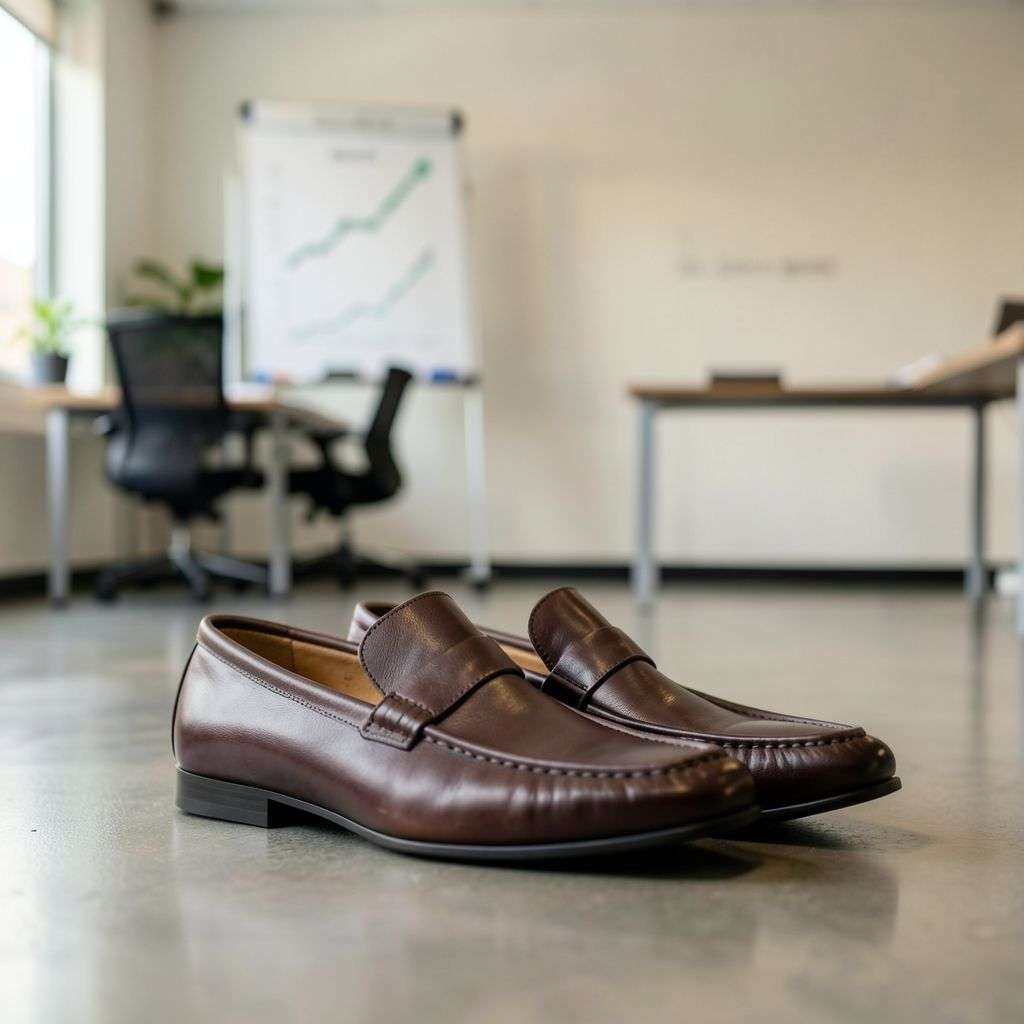
Founders who wear loafers as a deliberate uniform buy back attention, signal intent, and spend less per wear than almost anything else in their closet. flaneurs Loafers Remove a Decision You Make Every Day Series A founders trade on speed. You ship weekly, hire fast, and answer investors between customer calls. Every recurring decision you delete returns attention to the work that moves revenue. Footwear is one of those decisions. Laces cost seconds, and the dress-code menu costs more. You choose sneakers for the office, lace-ups for the board meeting, and boots for the offsite. Loafers collapse that menu. You slip them on at the door and walk into a pitch, a customer demo, or a airport security line without changing anything. Run a simple test. Wear one pair of loafers from Monday through Friday. Track how many times you swap shoes or second-guess your outfit. If the number drops, you found free time. If it stays flat, you lost nothing but a week. Loafers also cover a wide range. They pair with chinos, dark jeans, and tailored trousers, so one pair works for a coffee chat with a candidate and a formal term-sheet meeting. That range matters when your calendar jumps from a warehouse tour to a lawyer’s office in the same afternoon. I base this on styling practice, not a study, so treat it as a working hypothesis you can verify in your own week. Loafers Started as Work Shoes, Not Status Symbols Real examples beat theory, so start with the original. George Henry Bass founded G.H. Bass in 1876 with a mission to make the best possible shoe for its intended use. That sounds like a product-market-fit statement, because it is one. flaneurs In 1936, the company put a stylish spin on a Norwegian farm shoe designed for “loafing in the field”, and the Weejuns name shortens the word “Norwegian.” Bass added a small cutout for a penny, which made the original penny loafer. The company took a utility product, tweaked one feature, and gave it a name people remembered. g h bass +2 Bass did not invent status. The market supplied it. Bass still produces the penny loafer by hand, nearly a century after launch, and the design has outlasted the trends around it. Founders should recognize that pattern: function first, brand second, longevity third. analogshift You can use the same logic on yourself. Pick the shoe that does the job, wear it consistently, and let the reputation build. Consistency compounds faster than novelty. An investor who sees you in the same sharp, simple footwear across three meetings reads reliability, and reliability matters when you ask someone to wire seven figures. That last link is my reasoning, not a research finding, so weigh it accordingly. Loafers Signal Intent, and Intent Shapes Perception Harvard researchers Silvia Bellezza, Francesca Gino, and Anat Keinan studied how people judge deliberate rule-breaking in formal settings. They called their finding the red sneakers effect. Their studies showed that people grant higher status and competence to nonconforming individuals, and that perceived autonomy drives those inferences. econbiz The details matter for founders. In one study, students judged an unshaven professor in a t-shirt at a top-tier university as having more status and competence than a conventionally dressed one. The effect also came with a condition: a little flair raises perceived status and competence only when observers see it as intentional. Accidental violations of the dress code backfire. eurekalertpsychologicalscience Here is the honest limit. The researchers tested sneakers, gym clothes, and t-shirts. They did not test loafers, so no study proves a loafer effect. My argument is an inference: loafers sit between the sneaker and the oxford, so they look chosen rather than careless. A well-kept pair at a formal meeting reads as a decision. The research says that perception drives the payoff. Speed of judgment raises the stakes. Princeton researchers Janine Willis and Alexander Todorov found that judgments of faces after a 100-millisecond exposure correlated highly with judgments made without time limits. That study covered faces, not footwear, so do not treat your shoes as a lever. Treat them as one small detail that should not undercut the impression you build with your pitch. Careless details add noise, and loafers add very little. princeton Famous founders show the same dynamic at the top end. The APS summary of the red sneakers research notes that certain CEOs, including Bill Gates and Mark Zuckerberg, have appeared in casual dress at business events. The lesson is not to copy a billionaire. The lesson is to look like you chose your outfit on purpose. psychologicalscience Loafers Pay Back Faster Than Most Wardrobe Bets ROI thinking applies to shoes too. Start with the price. Analog Shift lists the G.H. Bass Larson Weejuns loafers at $175, and prices change, so check the current number before you buy. analogshift Now run illustrative math. Assume you wear one pair 200 days in a year. That assumption is mine, so swap in your own number. At $175, the first-year cost works out to about 88 cents per wear, and the figure keeps falling every day you keep wearing them. Compare that with the cost of a rotating cast of single-purpose shoes, each sitting unused for most of the month. Buy with a founder’s discipline, not a shopper’s impulse: The comfort of a slip-on also supports long days. Series A schedules stack travel, back-to-back meetings, and late nights, and shoes you can step into without thought remove one more source of friction. You do not need a spreadsheet to see the appeal, but a spreadsheet will confirm it if you want one. Loafers will not close your round, yet they remove one daily decision and make your style look chosen instead of accidental. Small edges compound, and this one costs under a dollar a wear at 200 wears. Written by Genzwalk.com Sources (facts only)

Why Series A Founders Should Wear Loafers Read More »

Crocs Slippers for Founders: The Lowest-Friction Upgrade You Can Make

Series A founders guard every dollar of burn and every minute of focus, so start with the cheapest upgrade available: crocs slippers. Crocs Slippers Remove Friction From Your Workday Speed decides who wins at Series A. Every small snag in your day steals minutes from hiring, shipping, and fundraising. Footwear looks trivial, yet it creates snags: laces, tight fits, and constant shoe swaps between the home office and the street. Crocs slippers remove most of them. Take the Classic Lined Clog. Crocs describes it as a slipper that also handles errands, with a pivoting heel strap that gives a secure fit or pushes forward so you can step in and go. One pair covers the home office, the coffee run, and the walk to the mailbox. You make one footwear decision in the morning instead of three. crocs I am not claiming crocs slippers will raise your revenue. I am making a narrower argument that I can defend. A product that demands no setup time and little upkeep fits the way a founder already works. You cut tools that demand attention, and crocs slippers demand almost none. Consider your own schedule. If you spend long stretches at one desk between investor calls and product reviews, a pair of crocs slippers under the desk gives your feet a place to rest without breaking your pace. You do not need a new routine, a dress code, or a purchasing process. You slide your feet in and keep working. The ROI Case: Why Crocs Slippers Earn Their Keep Return on investment starts with what you get for each unit of money and attention. Crocs slippers rest on Croslite, a proprietary encapsulated resin material that the brand and its retailers describe as neither plastic nor rubber. The retailer Bergzeit lists the Classic Lined Clog’s material as lightweight, insulating, abrasion resistant, and cushioning, and says the clog is easy to clean, dries quickly, and has good ventilation. sportanobergzeit Translate those specs into founder language: Upkeep stays light. Easy cleaning and quick drying mean you never schedule maintenance for your footwear. Abrasion resistance suggests the sole holds up under daily wear, though no spec sheet replaces your own wear test. Floors stay clean. The Classic Cozzzy slide lists non-marking, slip-resistant soles, a warm fuzzy liner, and Croslite foam footbeds. If you work in a shared office or a rented apartment, those soles matter more than they sound. softmoc Personality costs little. Each Cozzzy sandal carries seven holes for Jibbitz charms, which are sold separately. Founders who care about brand can express it for the price of a few charms instead of a new pair. softmoc Notice what this case leaves out: claims about posture, productivity, or health. No source I found supports those claims for crocs slippers, so I will not make them. The ROI here comes from low friction, low upkeep, and a product built for daily wear. Crocs the Company Shows the Playbook Works Series A founders trust real examples, so look at the company behind crocs slippers. Crocs, Inc. posted full-year 2025 revenue above $4.04 billion, with roughly $3.33 billion from the Crocs Brand and $715 million from HEYDUDE. The Crocs Brand grew for the eighth consecutive year, selling 129 million pairs, up 2%, while average selling prices stayed roughly flat. Unit growth without price erosion tells you buyers keep choosing the product at full value. sgbonlinesgbonline The company also teaches three startup lessons: First, own the customer relationship. Direct-to-consumer revenue now exceeds half of total enterprise revenue and grows faster than wholesale. Founders who control their channel control their margins and their data. sgbonline Second, expand beyond the hero product. CEO Andrew Rees said digital, international, and non-clog categories each now top $1.5 billion in revenue. Crocs built its fame on clogs, then grew past them. sgbonline Third, respect the cost of a bad acquisition. Crocs booked $737 million in non-cash impairment charges tied to the HEYDUDE trademark and goodwill, and HEYDUDE revenue fell 13.3% to $715 million. That write-down is the clearest lesson in the story. Series A founders who start thinking about M&A should price the downside before they sign. fashionunited The takeaway for your purchase: the company that makes your crocs slippers survived two decades as a public company by sticking to one durable product and watching its channels. Rees noted that Crocs passed the twenty-year mark as a public company on February 8. You buy from a business with a record, not a fad. sgbonline Know the Limits Before You Buy Crocs Slippers An honest argument names its weak spots. First, demand is uneven. North America Crocs revenue fell 7.4% to $1.7 billion in 2025, while international revenue carried the growth. For 2026, the company guides the Crocs Brand to roughly flat or up 2%. A mature U.S. market means you buy crocs slippers because they work, not because everyone else does. sgbonlinefashionunited Second, fit varies by model. One retailer advises narrow-footed buyers to size down on the Classic Clog. A listing for the Cozzzy slipper recommends sizing up. Check the sizing guide for the exact model, and confirm the return window before you commit. cotswoldoutdoorfinopsweekly Third, context matters. I keep crocs slippers for the desk, the couch, and the quick errand. I leave them out of investor meetings and board sessions, where footwear signals more than comfort. Choose the model that matches the use: the lined clog for versatility, the Cozzzy for lounging. Treat the purchase like any small experiment. Buy one pair, wear it for two weeks, and judge it by one metric: did it remove friction from your day? If it did, the experiment paid for itself. If it did not, you learned that cheaply. Founders audit every line item, and crocs slippers survive the audit on friction, upkeep, and proven demand. The stakes stay low, so the only real mistake is overthinking it. Written by Genzwalk.com Resources (facts sourced from):

Crocs Slippers for Founders: The Lowest-Friction Upgrade You Can Make Read More »

Boots for Women: The Footwear Category Where Focus Beats Breadth

Boots for women head toward a $98.25 billion market by 2030, and boot-heritage brands such as Dr. Martens and UGG show the margin and scale a focused founder can chase. Boots for Women Sit in a Market Big Enough for a Focused Bet Founders at Series A need a market where a small share still builds a real company, and boots for women meet that test. 360iResearch estimates the women’s boots market at $77.73 billion in 2023 and projects it will reach $98.25 billion by 2030, a 3.40% compound annual growth rate. A 1% share of the 2030 figure equals roughly $983 million in sales. The growth rate is modest, so you will win by taking customers from incumbents, not by riding a rising tide. Trend data shows where customers are moving. Trendalytics’ 2026 footwear forecast reports year-over-year search growth of 455% for zebra print boots and 326% for harness boots. It also notes rising interest in open-toe and split-toe boots after street-style attention at CPHFW. The page does not state that these figures cover women’s styles only, and search growth does not equal sales. Treat them as a signal for what to test, not as a forecast. Speed matters here. A founder who tests one trend-led boot in a small batch learns within a single season whether search interest turns into purchases. A founder who commits a full range to a trend risks a season of unsold stock. Start with one hero style, and let sell-through data, not search charts, decide the second. The same discipline applies to your story. Pick the one attribute your hero boot does best, such as fit, shaft height, or sole comfort, and build your product page, sizing guide, and returns policy around it. A clear promise on one attribute gives a small team something specific to test, which a vague claim about style does not. Boots for Women Reward Brands That Protect Price Dr. Martens shows what pricing power looks like in boot-heritage footwear. In fiscal 2026 (year ended March 2026), the company reported revenue of £764.9 million, down 2.9%, and adjusted EBIT of £79.3 million, up 30.6%. Gross margin rose 120 basis points to 66.2%, and non-marketing operating costs fell 6.0%. My calculation puts adjusted EBIT margin near 10.4%, which is not a company statement. Compare that gross margin with the other footwear companies in this series. On reported 62.8% for 2025, Deckers reported 57.7% for fiscal 2026, adidas reported 51.6%, and Nike reported 42.9%. Dr. Martens leads the group even though its sales fell. Revenue and profit can move in opposite directions when a brand protects its price and cuts cost. The channel data supports that reading. Dr. Martens reports Americas full-price direct-to-consumer revenue up 14% and APAC full-price direct-to-consumer revenue up 15%, while off-price pairs in US wholesale fell 31%. The company sold fewer discounted pairs and more full-price pairs, and its margin rose. For a new boots for women brand, that pattern argues for holding price from launch instead of discounting to move stock. Run one check this week. Split your sales into full-price and discounted pairs, and calculate gross margin for each. If discounted pairs carry most of your volume, you are buying revenue with margin, and no financing round fixes that for long. Margin discipline matters in boots for women, where you pay for materials and construction before you spend a dollar on marketing. Boots for Women Need a Plan Beyond the Boot UGG reported fiscal 2026 net sales of $2.74 billion, up 8.2%, and Deckers guides to mid-single-digit growth for the brand in fiscal 2027. Coverage of Deckers’ fourth quarter credits direct-to-consumer strength and newer categories, including sneakers, sandals, and clogs for UGG’s 9.2% growth to $408.6 million that quarter. A brand that built its name on one boot now grows by extending into adjacent shoes. Dr. Martens points the same way. Its fiscal 2026 results call shoes the standout performer, with shoe sales up 19% while group revenue fell 2.9%. The coverage gives no boot figure, so this article does not claim boot sales fell. The takeaway is narrower: a boot anchor earns the customer, and adjacent shoes add growth. Apply that sequence. Launch one boot, such as a leather ankle boot in black or brown, and prove it sells at full price. Then add a loafer, a sneaker, or a sandal that the same customer wears in the months she skips boots. You extend your sales calendar without leaving the customer you already know. This approach also lowers your risk, because every new product reaches an audience that already trusts your boots for women. Here is a hypothetical example of the math. Suppose your boot retails at $180 and lands at $60, a 67% gross margin that sits near Dr. Martens’ 66.2%. If acquiring a customer costs $45, the first order leaves $75 of gross profit after acquisition, before returns, shipping, and overhead. If that customer then buys a $120 loafer that lands at $40, you add $80 of gross profit with no new acquisition cost. These numbers are illustrative, so replace them with your own and rerun them every month. A 12-Month Playbook for Boots for Women Turn the evidence into a plan for boots for women that you can run before your next board meeting. Each step raises margin, proves loyalty, or protects cash. A Series A budget has room for little else, and the brands above show that discipline compounds. Before you place a production order, answer three questions in writing. What gross margin will this boot earn at full price? How many pairs must you sell at full price to cover the order? What will you do with unsold pairs that does not involve a deep discount? A founder who answers these questions before the order ships protects runway, and a founder who answers them after the stock arrives protects only excuses. Use the same three questions for every new style of boots for women you add. Boots for

Boots for Women: The Footwear Category Where Focus Beats Breadth Read More »

Formal Shoes for Men: The Highest-ROI Wardrobe Purchase for a Series A Founder

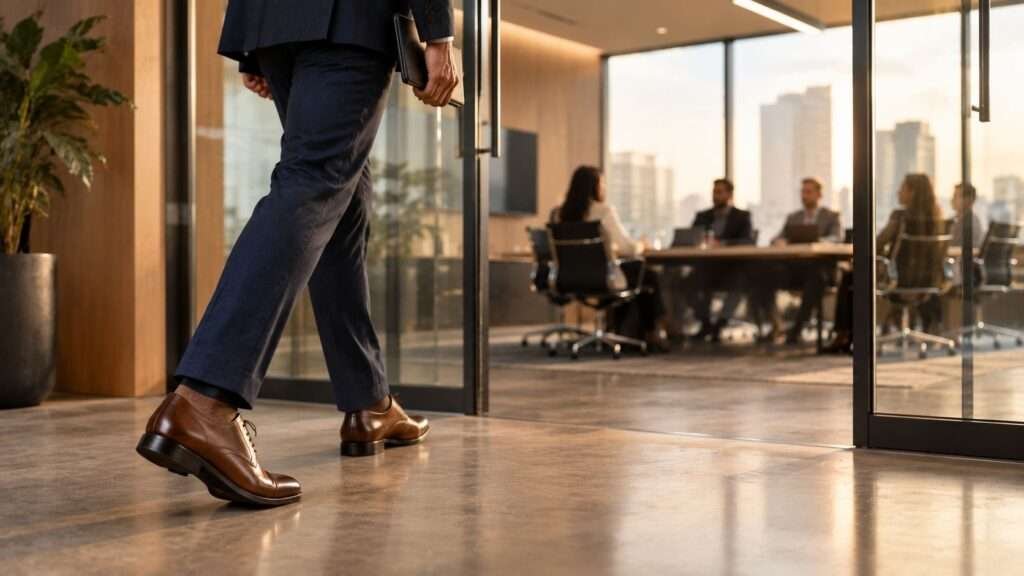
The strongest case for formal shoes for men starts at the door of the pitch room, before you say a single word. Formal Shoes for Men Send a Signal Before You Speak Start with what research shows about shoes alone. In a University of Kansas study, 63 students looked at pictures of 208 different pairs of shoes worn by the study’s participants. A new group of participants then accurately judged the shoe owners’ income, age, gender, and even attachment anxiety from the photographs, and viewers of well-kept shoes assumed the owners were more conscientious. The researchers also concluded that people wear shoes that reveal their personality, whether they intend to or not. Read the results with care. The observers were students, the photos were still images, and the findings describe first impressions, not facts about character. They still carry a practical lesson: strangers pull information from shoes after a quick look. A Series A pitch gives you a short window with partners who have never met you. Those partners read what they see, and your shoes are in the frame. Founders already tune the other first-impression variables: deck design, demo flow, the opening line. Formal shoes for men take less effort than any of them. You buy the pair once, polish it before each meeting, and wear it to every investor call, board session, and enterprise sales visit. Because the Kansas observers tied well-kept shoes to conscientiousness, condition matters as much as style. A scuffed pair works against you, while a polished pair costs you a few minutes. Formal Dress Changes How You Think Formal shoes for men do more than send a signal to other people. The formal outfit around them also changes how the wearer thinks. Columbia Business School’s Michael Slepian and colleagues ran five studies supporting the idea that formal clothing enhances abstract cognitive processing, the big-picture mode of thought. In the experiments where researchers asked students to change clothes, the students who suited up showed more abstract processing than the students in casual wear. Even after controlling for socioeconomic status, students wearing more formal clothing showed stronger inclinations toward abstract processing. The researchers traced the effect to felt power. Series A founders switch between spreadsheets and strategy all day. Big-picture thinking matters in the meetings where you pitch the vision, set pricing, or choose the next market. Formal shoes for men belong in those meetings. Apply the findings with discipline. Slepian defines “formal” relative to your peers and coworkers, not as a suit and tie, and the experiments tested clothing broadly, not shoes alone (Columbia Business School). Shoes complete an outfit, so treat this research as support for dressing up as a whole, with formal shoes for men as the finishing piece. columbia Slepian also cautions against turning the finding into a dress code, because organizations need people who attend to details as well as people who think abstractly (Columbia Business School). So reserve formal shoes for men for your big-picture days: the pitch, the board meeting, the strategy offsite. Wear what suits the work on execution days. columbia The Red Sneakers Objection to Formal Shoes for Men Fails Most Series A Founders Every founder has heard the argument against formal footwear: top performers dress down. The research behind it is real, and it comes with conditions. Harvard researchers Silvia Bellezza, Francesca Gino, and Anat Keinan found that a little sartorial flair can increase perceptions of status and competence, as long as observers view it as intentional. In one study, survey takers perceived a man in a nonconforming red bowtie at a black-tie golf club party as a higher-status member and a better golfer, provided he dressed differently on purpose. The positive inferences dissipate when observers see the nonconforming behavior as unintentional. Dressing for Success: From Lucky Socks to the Red Sneaker Effect +2 Now read the field evidence. At an academic conference, the researchers coded attendees’ clothing and compared it with publication counts, which served as a measure of status. Scholars with higher status tended to dress less conformingly (Association for Psychological Science). The effect follows status that a person already earned in a community that knows them. It also depends on the observer. People with a high need for uniqueness read nonconformity more readily as status, so a conventional investor may not read it the same way. In the executive symposium study, a professor taught in red Converse sneakers, and participants with a desire to stand out granted more status and competence to that nonconformity. Dressing for Success: From Lucky Socks to the Red Sneaker Effect +2 A founder entering a Series A pitch usually holds less banked status with those partners than a senior professor holds at her own conference. That comparison is my inference, not a study result, but it follows from the mechanism. Keinan describes the signal as proof that you have social capital to spend (Harvard Business School Working Knowledge). Early in a fundraise, you are still earning that capital. hbs Use a simple test. If the room already knows your traction, a deliberate break from the dress code may read as a confident choice. If the room still decides whether to fund you, formal shoes for men remove one variable you would otherwise have to defend. Buy Formal Shoes for Men Once and Measure the Return Price formal shoes for men the way you price any capital expense: cost per use. Construction decides that number. Goodyear-welted shoes generally outlast Blake-stitched shoes because the welt adds a layer of protection between the sole and the insole. A welted pair can be resoled multiple times, while shoes with cemented construction, where the sole is simply glued to the upper, are generally not designed for a full resole. Gear Patrol also warns that some manufacturers add decorative stitches or welts to cemented shoes so they look welted. Ask how a pair was built before you pay. Want a Quality Pair of Shoes? Consider These Two Factors +2 Run the numbers with

Formal Shoes for Men: The Highest-ROI Wardrobe Purchase for a Series A Founder Read More »

Footwear Is the Category Where Series A Founders Can Build Margin That Lasts

Footwear rewards founders who protect one hero product and punishes those who stretch it too thin: HOKA grew to $2.59 billion in annual sales, while Allbirds sold its assets for $39 million. The Footwear Market Is Big Enough for a Focused Bet Founders at Series A need a market where a small share still builds a large company. Footwear meets that test. Grand View Research projects that the global footwear market will reach $588.22 billion in 2030, growing at a 4.3% compound annual rate from 2025 to 2030. That rate will not make headlines, but the base is large, so a 1% share of the 2030 forecast equals roughly $5.9 billion in sales. Treat any forecast as a range, not a promise, and check it against company results, which the next section does. The same report shows where the demand sits. Women accounted for 47.8% of global footwear revenue in 2024, and non-athletic footwear accounted for 66.3%. North America held 25.3%, and Asia Pacific held the largest regional share. For a founder, those splits point to two clear lanes: women’s footwear and everyday, non-athletic shoes such as loafers, flats, sandals, and casual sneakers. Speed matters here, because a focused lane shortens your learning cycle. A founder who sells one women’s casual style can test price, fit, and color within weeks, while a founder who launches five categories at once needs months to read the same signals. The market size gives you room to start narrow and still reach scale. Consumer behavior adds a second reason to pick footwear now. ThredUp’s 2026 Resale Report found that 67% of surveyed Gen Z consumers weigh resale value before they buy, and 52% of Gen Z say they buy clothing more readily when resale or trade-in is built in. That survey covers fashion shoppers broadly, not footwear alone, so treat it as a signal to test, not a proven footwear result. Still, the signal makes a trade-in program a logical experiment for a footwear brand, because the cost of a small pilot is low and the data returns fast. Footwear Leaders Print Margin, Not Just Revenue Revenue growth gets attention, but margin pays for the next stage. Three footwear companies show what strong execution looks like. On Holding reported 2025 net sales of CHF 3,014.0 million, up 30.0% (35.6% in constant currency). Its gross profit margin rose to 62.8% from 60.6%, and its adjusted EBITDA margin rose to 18.8% from 16.7%. On also guides to at least 23% constant-currency growth in 2026. That combination shows a footwear brand can grow fast and improve profitability in the same year. Deckers Brands closed fiscal 2026 (year ended March 31, 2026) with $5.47 billion in net sales, up 9.8%. HOKA contributed $2.59 billion, a 15.9% increase, and UGG contributed $2.74 billion, an 8.2% increase. Deckers kept its gross margin at 57.7%. The company runs two footwear brands with different customers, and each one earns real margin. Birkenstock reported fiscal 2025 revenue of €2.1 billion, up 16%, with adjusted EBITDA of €667 million and a 31.8% adjusted EBITDA margin. Its gross margin reached 59.1%. Birkenstock also grew its direct-to-consumer revenue 11% (12% in constant currency) in the same year, so it kept growing the channel where it controls price and customer data. Use these numbers as a benchmark. These leaders report gross margins between 57.7% and 62.8%. If your footwear unit economics sit far below that range, your pricing, sourcing, or returns need work before you spend more on acquisition. What Allbirds Teaches Founders About Footwear Allbirds shows the other side of the ledger. The company went public in 2021, and its revenue began to drop in 2022. Reporting from Market Realist says it opened stores in city centers across America and expanded into apparel in ways that did not resonate with its core customers. Co-founder Tim Brown said the rapid success caused an identity crisis: “we lost some of our DNA.” The financial result followed. Fast Company reported a 2025 net loss of $77.3 million, with $26.7 million in cash at year-end and $55.1 million of cash used in operations. In January 2026, Allbirds announced it would close almost all of its physical stores. On March 30, 2026, it agreed to sell all of its intellectual property, assets, and liabilities to American Exchange Group for $39 million, and it said it did not expect to continue operations afterward. Compare that with the leaders above. On, HOKA, and Birkenstock each built around a recognizable hero product and kept margins high. Allbirds spread its brand across stores and apparel while revenue fell. The reporting supports one lesson for Series A founders: expand a footwear line only after your hero product earns repeat purchases. A new category or a new store format adds fixed cost, and Allbirds’ own numbers show how fast that cost drains a young company’s cash when sales fall. Note that sources disagree on Allbirds’ peak valuation, so this article does not cite one. The $39 million sale price and the 2025 loss figures come from the March 2026 reporting. A Footwear Playbook for the Next 12 Months Turn the evidence into a plan you can run before your next board meeting. Here is a hypothetical example of why the margin floor matters. Suppose your footwear sells at $100 a pair with a 58% gross margin, which sits close to Deckers’ 57.7%. Each pair leaves $58 of gross profit. If acquiring a customer costs $30, you keep $28 per first order before returns, shipping, and overhead. If your gross margin drops to 40%, the same sale leaves $40 and only $10 after acquisition. Repeat purchases then decide whether you build a business or fund a loss. These numbers are illustrative, so replace them with your own and rerun the math every month. This sequence keeps spending tied to evidence. Each step either raises margin, proves loyalty, or protects cash, and a Series A budget has room for little else. Footwear pays founders who build one product

Footwear Is the Category Where Series A Founders Can Build Margin That Lasts Read More »

Sports Shoes Are the Cheapest Performance Upgrade a Series A Founder Can Buy

The cheapest performance upgrade available to a Series A founder is a pair of sports shoes, and most founders still skip it. Your Health Is a Company Risk, So Price It You track burn, churn, and runway every week. You probably never track your own energy. That gap matters because a Series A company runs on a small team where the founder holds the vision, the hiring pipeline, and the investor relationships. When the founder stalls, all three stall with them. The data on founder strain is hard to ignore. Researcher Michael Freeman and colleagues surveyed 242 entrepreneurs and 93 demographically matched comparison participants. Forty-nine percent of the entrepreneurs reported at least one lifetime mental health condition, and 32 percent reported two or more. The survey relied on anonymous self-reports, so read the numbers as a strong warning signal, not a clinical census. academia Most founders answer that signal with software: a meditation app, a sleep tracker, a productivity stack. Software adds another screen to a day already built from screens. Sports shoes add movement, and movement has large-scale randomized-trial evidence behind it, as the next section shows. Think of the return in three measurable units: energy, focus, and consistency. You can score each one daily. That makes sports shoes an operating expense you can audit, not a vague wellness perk. The Evidence Backs Walking and Jogging Two large reviews make the case. A 2024 BMJ network meta-analysis of randomized trials covered 218 studies and 14,170 participants. Walking or jogging, yoga, strength training, and dancing ranked as the most effective forms of exercise for depression, and benefits grew with intensity. getfitcraftpharmaceutical-journal A 2026 British Journal of Sports Medicine umbrella review went bigger: 81 meta-analyses, 1,079 component studies, and 79,551 participants. Exercise reduced depression symptoms (SMD −0.61) and anxiety symptoms (SMD −0.47), and aerobic exercise showed the strongest effect on both. Shorter, lower-intensity sessions linked most strongly with anxiety reduction. A 20-minute brisk walk between investor calls is not a consolation prize. It sits inside the range the evidence supports. jcu The same review also found that aerobic, group-based, and supervised formats showed the greatest benefits for depression. A walking meeting with a cofounder or direct report counts as a group format by default. bmj Respect the limits. The authors position exercise as part of a comprehensive treatment plan that can complement medication and psychotherapy. If you carry persistent symptoms, talk to a clinician and keep walking. bmj The World Health Organization sets the dose: adults should do at least 150 to 300 minutes of moderate-intensity aerobic physical activity, or at least 75 to 150 minutes of vigorous-intensity activity, or an equivalent combination. That works out to roughly 21 to 43 minutes a day at the moderate level. WHO also states that adults who do not meet these recommendations still benefit from some physical activity, and should build up gradually. Walking and jogging both need the same gear: sports shoes. nihnih Sports Shoes Remove the Friction That Kills the Habit Founders cut friction for a living, so apply that instinct here. A gym membership demands travel, a time block, and a change of clothes. A walking meeting demands one thing: sports shoes by the door. Run the math, and treat it as arithmetic, not a study result. Picture a CEO who holds three 30-minute one-on-ones per week. She laces up her sports shoes and takes all three on foot. That delivers 90 of the 150 minutes WHO sets as the weekly floor, and it adds zero blocks to her calendar, because the meetings already exist. Add two 15-minute walks during phone-based candidate screens or investor check-ins, and she reaches 120 minutes without touching a single focus block. That is the ROI argument: you stack health onto work you already schedule. The first weeks carry the most risk, so footwear deserves a real decision. A systematic review and meta-analysis of 13 studies found a weighted injury incidence of 17.8 per 1,000 hours of running in novice runners and 7.7 in recreational runners. The review does not show that shoes alone prevent injury, so do not buy a pair on that promise. It does show that beginners carry more risk, which argues for a gradual start. Walk first, add running slowly, and choose sports shoes that fit your feet so discomfort never hands you an excuse to stop. altmetric Run Your Sports Shoes Pilot as a 30-Day Experiment You do not need to trust the research to test it. Treat the next 30 days like any other pilot: one owner, one budget line, one metric. Set two decision rules before you start. If you hit 120 minutes in week three without moving a meeting, raise the target. If you miss, shrink the walk instead of abandoning the goal. The budget line is one pair of sports shoes. The pilot needs no vendor review, no procurement cycle, and no onboarding. If your minutes climb and your focus scores follow, you keep the habit. If they do not, you lost one purchase and gained a real answer. Founders ship fast and measure everything, so measure this. Buy the sports shoes, take your next one-on-one on foot, and let 30 days of your own data settle the argument. Written by Genzwalk.com External resources (facts verified from these sources)

Sports Shoes Are the Cheapest Performance Upgrade a Series A Founder Can Buy Read More »