

Footwear rewards founders who protect one hero product and punishes those who stretch it too thin: HOKA grew to $2.59 billion in annual sales, while Allbirds sold its assets for $39 million.
The Footwear Market Is Big Enough for a Focused Bet

Founders at Series A need a market where a small share still builds a large company. Footwear meets that test. Grand View Research projects that the global footwear market will reach $588.22 billion in 2030, growing at a 4.3% compound annual rate from 2025 to 2030. That rate will not make headlines, but the base is large, so a 1% share of the 2030 forecast equals roughly $5.9 billion in sales. Treat any forecast as a range, not a promise, and check it against company results, which the next section does.
The same report shows where the demand sits. Women accounted for 47.8% of global footwear revenue in 2024, and non-athletic footwear accounted for 66.3%. North America held 25.3%, and Asia Pacific held the largest regional share. For a founder, those splits point to two clear lanes: women’s footwear and everyday, non-athletic shoes such as loafers, flats, sandals, and casual sneakers.
Speed matters here, because a focused lane shortens your learning cycle. A founder who sells one women’s casual style can test price, fit, and color within weeks, while a founder who launches five categories at once needs months to read the same signals. The market size gives you room to start narrow and still reach scale.
Consumer behavior adds a second reason to pick footwear now. ThredUp’s 2026 Resale Report found that 67% of surveyed Gen Z consumers weigh resale value before they buy, and 52% of Gen Z say they buy clothing more readily when resale or trade-in is built in. That survey covers fashion shoppers broadly, not footwear alone, so treat it as a signal to test, not a proven footwear result. Still, the signal makes a trade-in program a logical experiment for a footwear brand, because the cost of a small pilot is low and the data returns fast.
Footwear Leaders Print Margin, Not Just Revenue
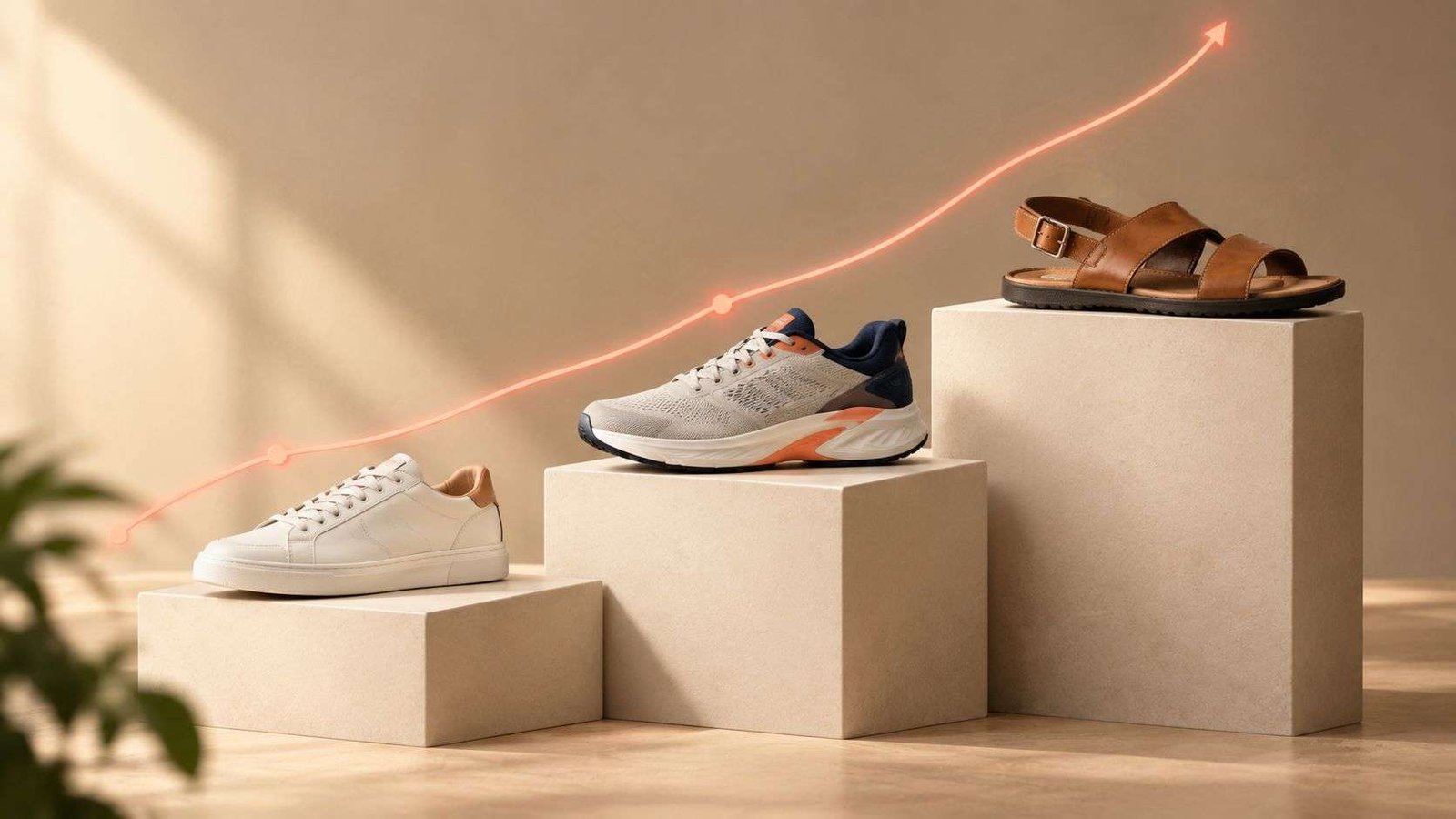
Revenue growth gets attention, but margin pays for the next stage. Three footwear companies show what strong execution looks like.
On Holding reported 2025 net sales of CHF 3,014.0 million, up 30.0% (35.6% in constant currency). Its gross profit margin rose to 62.8% from 60.6%, and its adjusted EBITDA margin rose to 18.8% from 16.7%. On also guides to at least 23% constant-currency growth in 2026. That combination shows a footwear brand can grow fast and improve profitability in the same year.
Deckers Brands closed fiscal 2026 (year ended March 31, 2026) with $5.47 billion in net sales, up 9.8%. HOKA contributed $2.59 billion, a 15.9% increase, and UGG contributed $2.74 billion, an 8.2% increase. Deckers kept its gross margin at 57.7%. The company runs two footwear brands with different customers, and each one earns real margin.
Birkenstock reported fiscal 2025 revenue of €2.1 billion, up 16%, with adjusted EBITDA of €667 million and a 31.8% adjusted EBITDA margin. Its gross margin reached 59.1%. Birkenstock also grew its direct-to-consumer revenue 11% (12% in constant currency) in the same year, so it kept growing the channel where it controls price and customer data.
Use these numbers as a benchmark. These leaders report gross margins between 57.7% and 62.8%. If your footwear unit economics sit far below that range, your pricing, sourcing, or returns need work before you spend more on acquisition.
What Allbirds Teaches Founders About Footwear
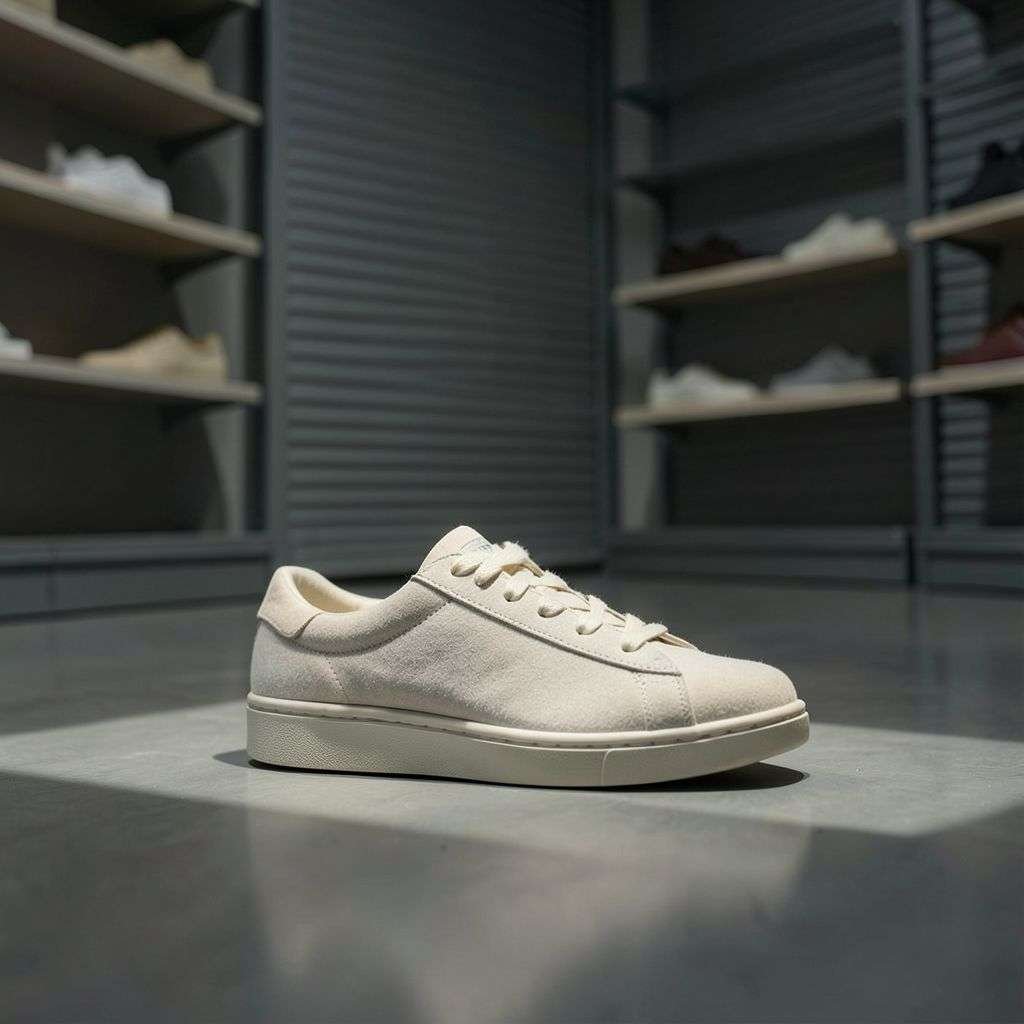
Allbirds shows the other side of the ledger. The company went public in 2021, and its revenue began to drop in 2022. Reporting from Market Realist says it opened stores in city centers across America and expanded into apparel in ways that did not resonate with its core customers. Co-founder Tim Brown said the rapid success caused an identity crisis: “we lost some of our DNA.”
The financial result followed. Fast Company reported a 2025 net loss of $77.3 million, with $26.7 million in cash at year-end and $55.1 million of cash used in operations. In January 2026, Allbirds announced it would close almost all of its physical stores. On March 30, 2026, it agreed to sell all of its intellectual property, assets, and liabilities to American Exchange Group for $39 million, and it said it did not expect to continue operations afterward.
Compare that with the leaders above. On, HOKA, and Birkenstock each built around a recognizable hero product and kept margins high. Allbirds spread its brand across stores and apparel while revenue fell. The reporting supports one lesson for Series A founders: expand a footwear line only after your hero product earns repeat purchases. A new category or a new store format adds fixed cost, and Allbirds’ own numbers show how fast that cost drains a young company’s cash when sales fall.
Note that sources disagree on Allbirds’ peak valuation, so this article does not cite one. The $39 million sale price and the 2025 loss figures come from the March 2026 reporting.
A Footwear Playbook for the Next 12 Months

Turn the evidence into a plan you can run before your next board meeting.
- Pick one hero product. Choose a single footwear style, such as a neutral loafer, a white sneaker, or a leather sandal, and sell it in a few colors before you add categories.
- Set a margin floor. Aim for gross margins near the 57.7% to 62.8% range that On, Deckers, and Birkenstock report. If you sit below it, fix cost of goods and return rates first.
- Test resale or trade-in. Run a small pilot with 100 customers, and measure whether trade-in credit raises repeat purchase. ThredUp’s survey suggests the idea deserves a test, but your own data decides.
- Delay stores and apparel. Allbirds’ decline followed rapid store openings and an apparel push. Keep your channel mix tight until the hero product shows repeat demand.
- Review monthly. Track gross margin, repeat purchase rate, and cash runway in one dashboard, and stop any experiment that misses its target for two straight months.
Here is a hypothetical example of why the margin floor matters. Suppose your footwear sells at $100 a pair with a 58% gross margin, which sits close to Deckers’ 57.7%. Each pair leaves $58 of gross profit. If acquiring a customer costs $30, you keep $28 per first order before returns, shipping, and overhead. If your gross margin drops to 40%, the same sale leaves $40 and only $10 after acquisition. Repeat purchases then decide whether you build a business or fund a loss. These numbers are illustrative, so replace them with your own and rerun the math every month.
This sequence keeps spending tied to evidence. Each step either raises margin, proves loyalty, or protects cash, and a Series A budget has room for little else.
Footwear pays founders who build one product people wear daily and defend its margin. Pick your hero pair, prove it sells twice, and only then add a second line.
Written by Genzwalk.com
Sources
- Grand View Research: Footwear market size, share and trends (via MarketResearch.com)
- On Holding: fourth quarter and full year 2025 results (Business Wire)
- FashionUnited: Deckers Brands FY26 net sales
- World Footwear: Birkenstock fiscal year 2025 results
- Fast Company via Yahoo Finance: What happened to Allbirds?
- Market Realist: Why did Allbirds fail?
- ThredUp: 14th annual Resale Report