

The cheapest performance upgrade available to a Series A founder is a pair of sports shoes, and most founders still skip it.
Your Health Is a Company Risk, So Price It
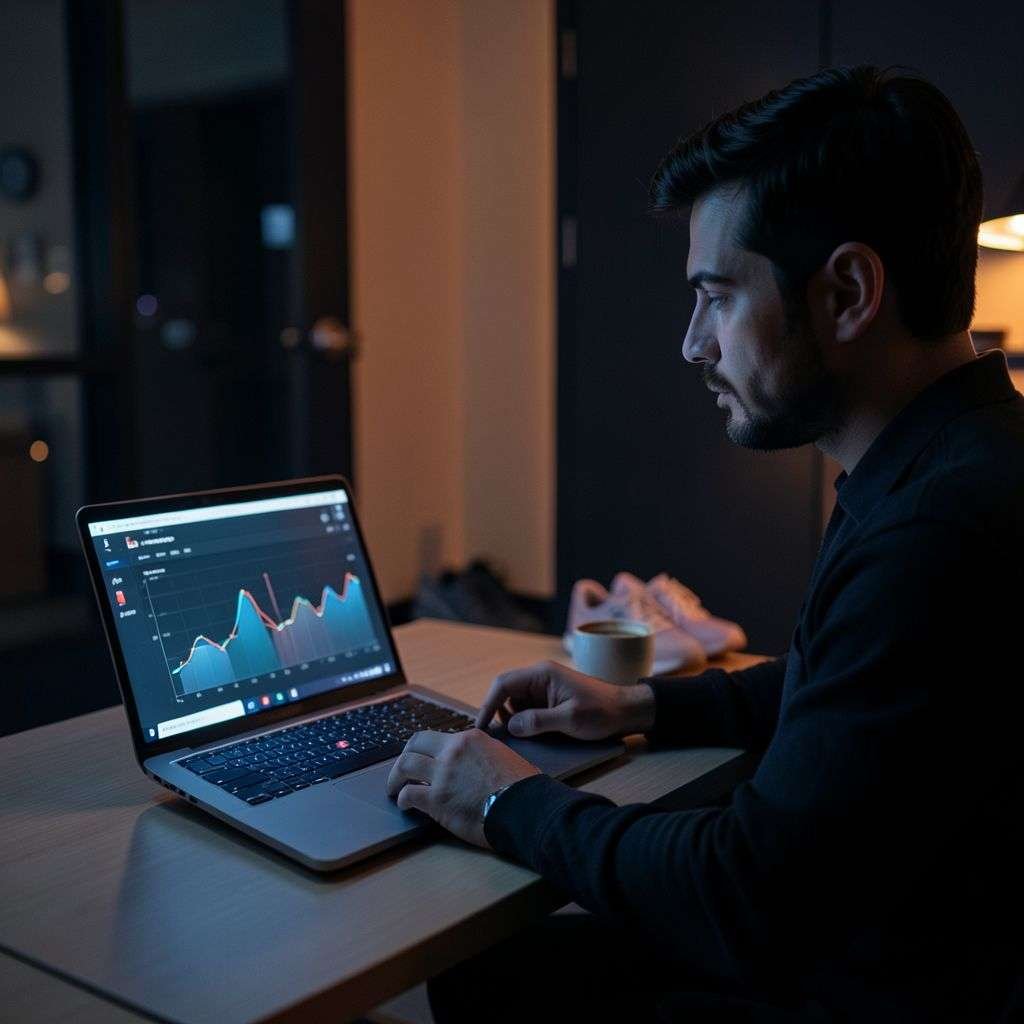
You track burn, churn, and runway every week. You probably never track your own energy. That gap matters because a Series A company runs on a small team where the founder holds the vision, the hiring pipeline, and the investor relationships. When the founder stalls, all three stall with them.
The data on founder strain is hard to ignore. Researcher Michael Freeman and colleagues surveyed 242 entrepreneurs and 93 demographically matched comparison participants. Forty-nine percent of the entrepreneurs reported at least one lifetime mental health condition, and 32 percent reported two or more. The survey relied on anonymous self-reports, so read the numbers as a strong warning signal, not a clinical census. academia
Most founders answer that signal with software: a meditation app, a sleep tracker, a productivity stack. Software adds another screen to a day already built from screens. Sports shoes add movement, and movement has large-scale randomized-trial evidence behind it, as the next section shows.
Think of the return in three measurable units: energy, focus, and consistency. You can score each one daily. That makes sports shoes an operating expense you can audit, not a vague wellness perk.
The Evidence Backs Walking and Jogging
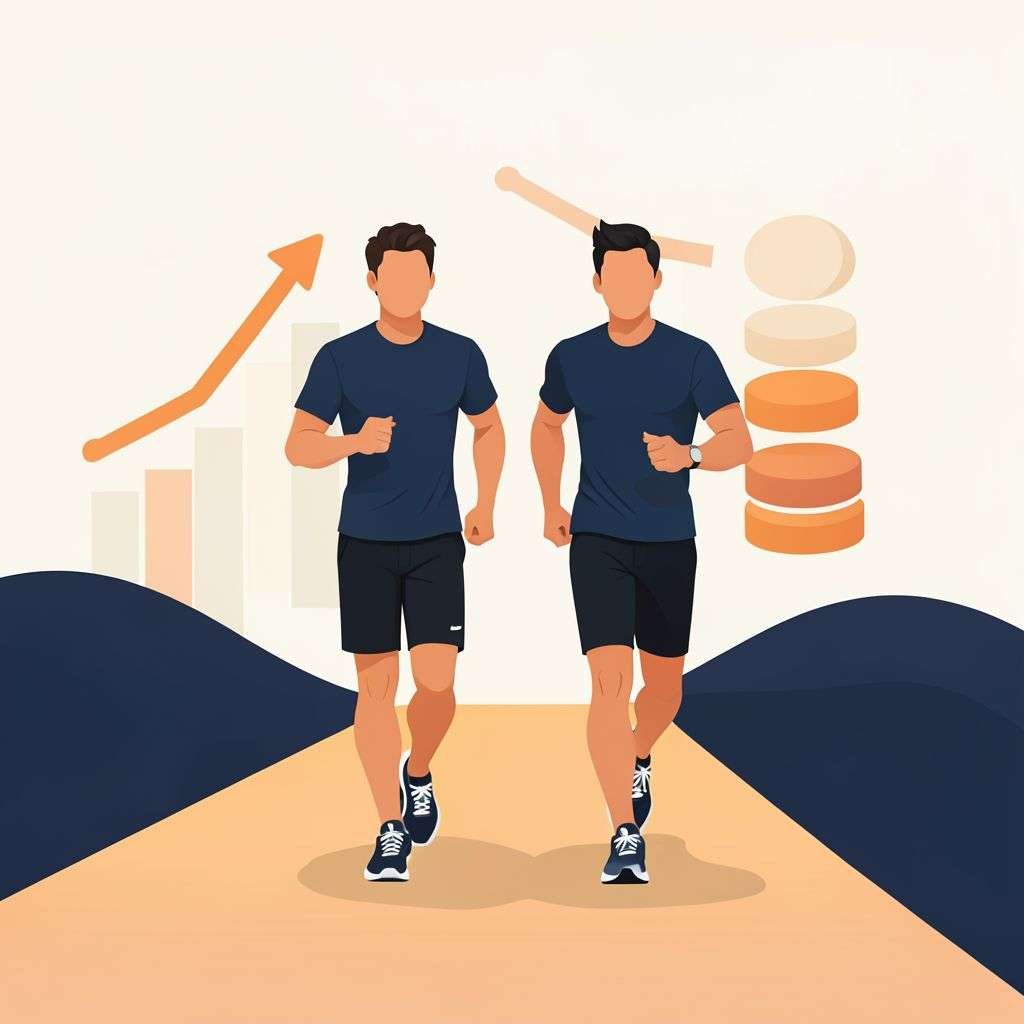
Two large reviews make the case. A 2024 BMJ network meta-analysis of randomized trials covered 218 studies and 14,170 participants. Walking or jogging, yoga, strength training, and dancing ranked as the most effective forms of exercise for depression, and benefits grew with intensity. getfitcraftpharmaceutical-journal
A 2026 British Journal of Sports Medicine umbrella review went bigger: 81 meta-analyses, 1,079 component studies, and 79,551 participants. Exercise reduced depression symptoms (SMD −0.61) and anxiety symptoms (SMD −0.47), and aerobic exercise showed the strongest effect on both. Shorter, lower-intensity sessions linked most strongly with anxiety reduction. A 20-minute brisk walk between investor calls is not a consolation prize. It sits inside the range the evidence supports. jcu
The same review also found that aerobic, group-based, and supervised formats showed the greatest benefits for depression. A walking meeting with a cofounder or direct report counts as a group format by default. bmj
Respect the limits. The authors position exercise as part of a comprehensive treatment plan that can complement medication and psychotherapy. If you carry persistent symptoms, talk to a clinician and keep walking. bmj
The World Health Organization sets the dose: adults should do at least 150 to 300 minutes of moderate-intensity aerobic physical activity, or at least 75 to 150 minutes of vigorous-intensity activity, or an equivalent combination. That works out to roughly 21 to 43 minutes a day at the moderate level. WHO also states that adults who do not meet these recommendations still benefit from some physical activity, and should build up gradually. Walking and jogging both need the same gear: sports shoes. nihnih
Sports Shoes Remove the Friction That Kills the Habit
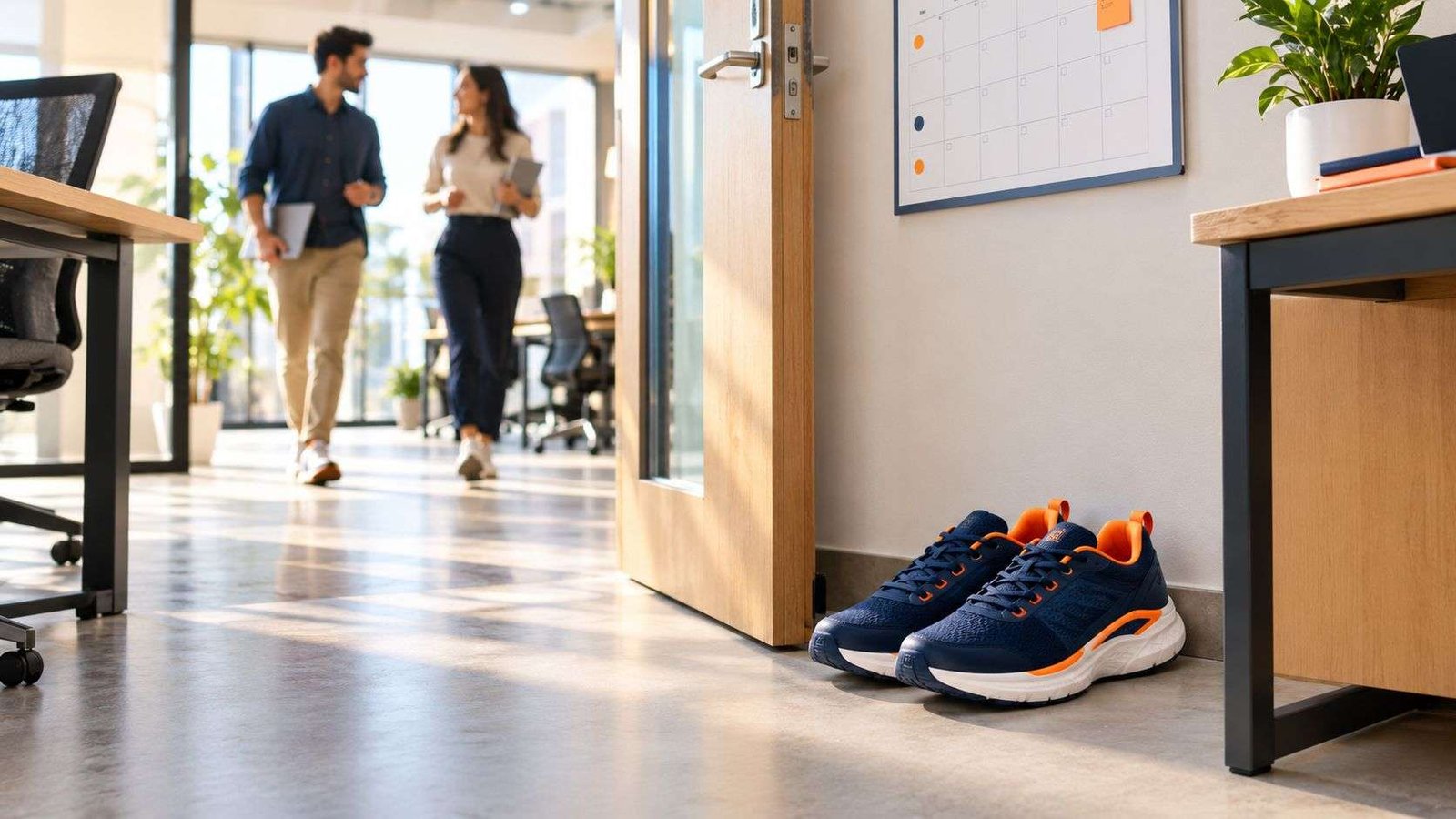
Founders cut friction for a living, so apply that instinct here. A gym membership demands travel, a time block, and a change of clothes. A walking meeting demands one thing: sports shoes by the door.
Run the math, and treat it as arithmetic, not a study result. Picture a CEO who holds three 30-minute one-on-ones per week. She laces up her sports shoes and takes all three on foot. That delivers 90 of the 150 minutes WHO sets as the weekly floor, and it adds zero blocks to her calendar, because the meetings already exist. Add two 15-minute walks during phone-based candidate screens or investor check-ins, and she reaches 120 minutes without touching a single focus block. That is the ROI argument: you stack health onto work you already schedule.
The first weeks carry the most risk, so footwear deserves a real decision. A systematic review and meta-analysis of 13 studies found a weighted injury incidence of 17.8 per 1,000 hours of running in novice runners and 7.7 in recreational runners. The review does not show that shoes alone prevent injury, so do not buy a pair on that promise. It does show that beginners carry more risk, which argues for a gradual start. Walk first, add running slowly, and choose sports shoes that fit your feet so discomfort never hands you an excuse to stop. altmetric
Run Your Sports Shoes Pilot as a 30-Day Experiment
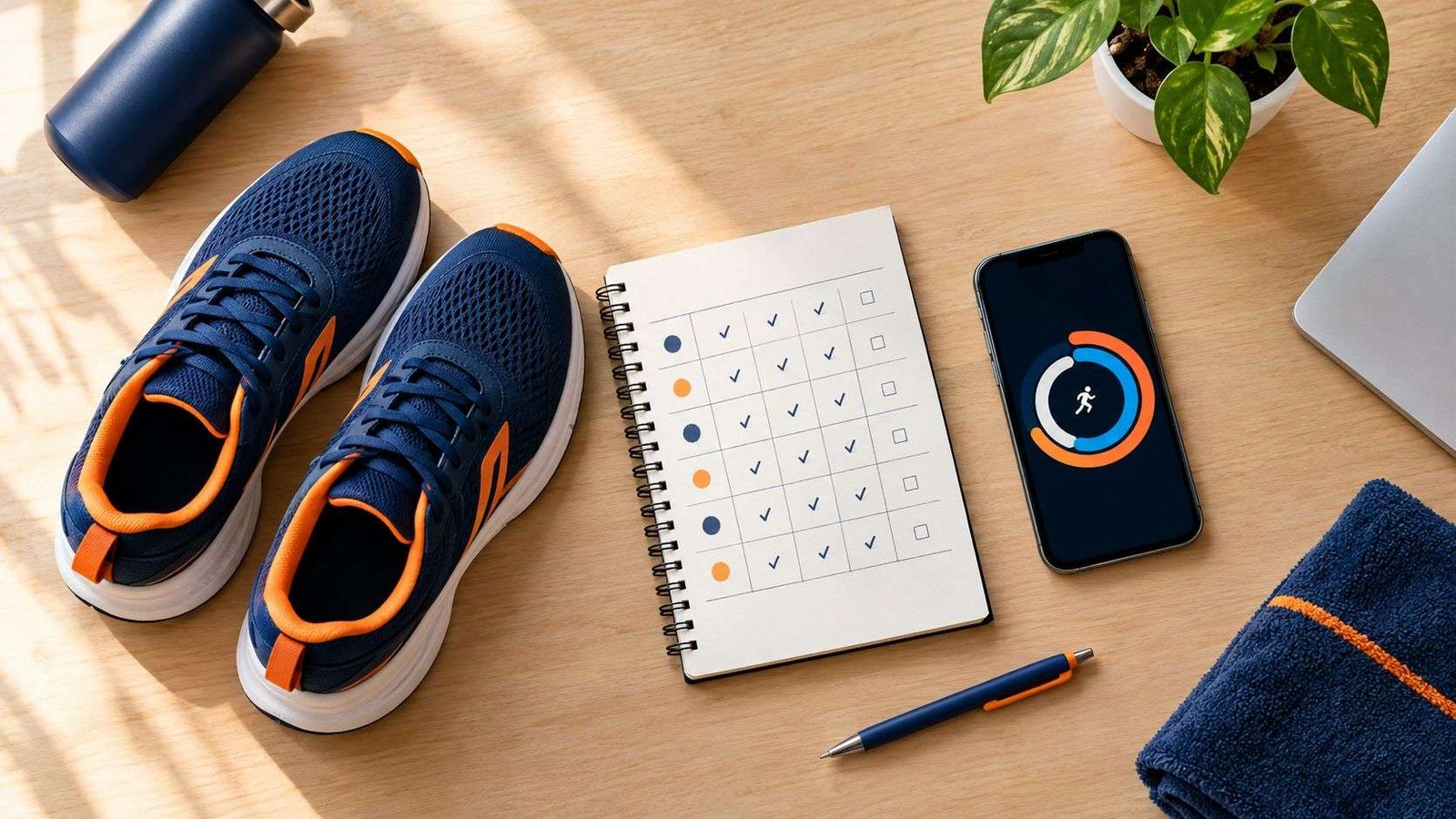
You do not need to trust the research to test it. Treat the next 30 days like any other pilot: one owner, one budget line, one metric.
- Week one: Buy one pair of sports shoes and keep them where you will see them, by the front door or under your desk. Convert two recurring one-on-ones into walking meetings. Log your weekly active minutes against the 150-minute WHO target.
- Week two: Hold the minutes steady. Rate your focus from one to ten each evening. A simple score beats memory when you review.
- Week three: Lace up your sports shoes for one extra 20-minute walk or easy jog on a day with no walkable meetings. Keep the intensity moderate.
- Week four: Review the log. Count minutes, compare focus scores, and note how many sessions you skipped and why. Keep what moved the numbers and drop what did not.
Set two decision rules before you start. If you hit 120 minutes in week three without moving a meeting, raise the target. If you miss, shrink the walk instead of abandoning the goal.
The budget line is one pair of sports shoes. The pilot needs no vendor review, no procurement cycle, and no onboarding. If your minutes climb and your focus scores follow, you keep the habit. If they do not, you lost one purchase and gained a real answer.
Founders ship fast and measure everything, so measure this. Buy the sports shoes, take your next one-on-one on foot, and let 30 days of your own data settle the argument.
Written by Genzwalk.com
External resources (facts verified from these sources)
- WHO Guidelines on Physical Activity and Sedentary Behaviour (NCBI Bookshelf): https://www.ncbi.nlm.nih.gov/books/NBK566048/
- Munro et al., “Effect of exercise on depression and anxiety symptoms: systematic umbrella review with meta-meta-analysis,” British Journal of Sports Medicine, 2026: https://bjsm.bmj.com/content/60/8/590
- Videbæk et al., “Incidence of Running-Related Injuries Per 1000 h of running in Different Types of Runners,” Sports Medicine, 2015: https://pubmed.ncbi.nlm.nih.gov/25951917/
- Pharmaceutical Journal summary of Noetel et al., BMJ 2024 (exercise for depression): https://pharmaceutical-journal.com/article/news/all-forms-of-exercise-effective-in-treating-depression-meta-analysis-finds
- Freeman et al., entrepreneur mental health study (UCSF author page): https://ucsf.academia.edu/MichaelFreeman