

The strongest case for formal shoes for men starts at the door of the pitch room, before you say a single word.
Formal Shoes for Men Send a Signal Before You Speak

Start with what research shows about shoes alone. In a University of Kansas study, 63 students looked at pictures of 208 different pairs of shoes worn by the study’s participants. A new group of participants then accurately judged the shoe owners’ income, age, gender, and even attachment anxiety from the photographs, and viewers of well-kept shoes assumed the owners were more conscientious. The researchers also concluded that people wear shoes that reveal their personality, whether they intend to or not.
Read the results with care. The observers were students, the photos were still images, and the findings describe first impressions, not facts about character. They still carry a practical lesson: strangers pull information from shoes after a quick look. A Series A pitch gives you a short window with partners who have never met you. Those partners read what they see, and your shoes are in the frame.
Founders already tune the other first-impression variables: deck design, demo flow, the opening line. Formal shoes for men take less effort than any of them. You buy the pair once, polish it before each meeting, and wear it to every investor call, board session, and enterprise sales visit. Because the Kansas observers tied well-kept shoes to conscientiousness, condition matters as much as style. A scuffed pair works against you, while a polished pair costs you a few minutes.
Formal Dress Changes How You Think

Formal shoes for men do more than send a signal to other people. The formal outfit around them also changes how the wearer thinks. Columbia Business School’s Michael Slepian and colleagues ran five studies supporting the idea that formal clothing enhances abstract cognitive processing, the big-picture mode of thought. In the experiments where researchers asked students to change clothes, the students who suited up showed more abstract processing than the students in casual wear. Even after controlling for socioeconomic status, students wearing more formal clothing showed stronger inclinations toward abstract processing. The researchers traced the effect to felt power.
Series A founders switch between spreadsheets and strategy all day. Big-picture thinking matters in the meetings where you pitch the vision, set pricing, or choose the next market. Formal shoes for men belong in those meetings.
Apply the findings with discipline. Slepian defines “formal” relative to your peers and coworkers, not as a suit and tie, and the experiments tested clothing broadly, not shoes alone (Columbia Business School). Shoes complete an outfit, so treat this research as support for dressing up as a whole, with formal shoes for men as the finishing piece. columbia
Slepian also cautions against turning the finding into a dress code, because organizations need people who attend to details as well as people who think abstractly (Columbia Business School). So reserve formal shoes for men for your big-picture days: the pitch, the board meeting, the strategy offsite. Wear what suits the work on execution days. columbia
The Red Sneakers Objection to Formal Shoes for Men Fails Most Series A Founders
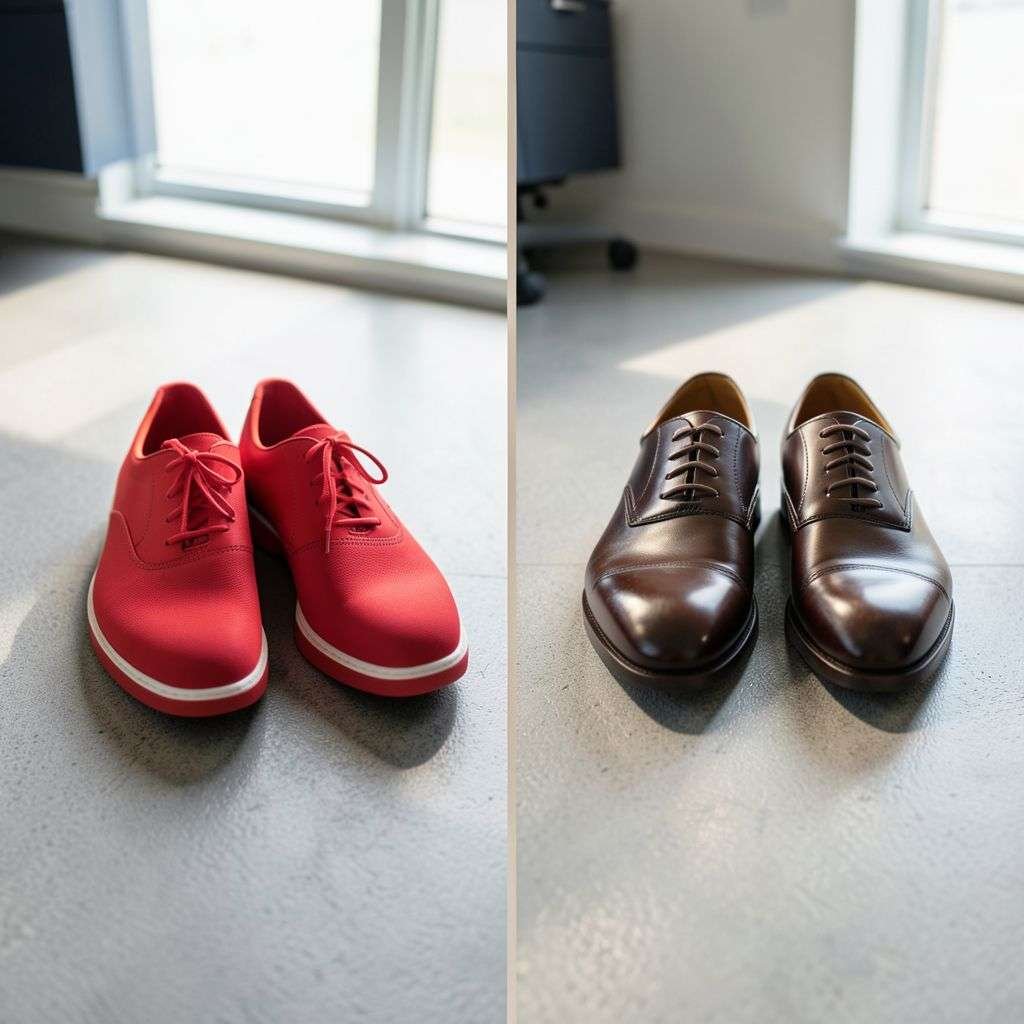
Every founder has heard the argument against formal footwear: top performers dress down. The research behind it is real, and it comes with conditions. Harvard researchers Silvia Bellezza, Francesca Gino, and Anat Keinan found that a little sartorial flair can increase perceptions of status and competence, as long as observers view it as intentional. In one study, survey takers perceived a man in a nonconforming red bowtie at a black-tie golf club party as a higher-status member and a better golfer, provided he dressed differently on purpose. The positive inferences dissipate when observers see the nonconforming behavior as unintentional. Dressing for Success: From Lucky Socks to the Red Sneaker Effect +2
Now read the field evidence. At an academic conference, the researchers coded attendees’ clothing and compared it with publication counts, which served as a measure of status. Scholars with higher status tended to dress less conformingly (Association for Psychological Science). The effect follows status that a person already earned in a community that knows them. It also depends on the observer. People with a high need for uniqueness read nonconformity more readily as status, so a conventional investor may not read it the same way. In the executive symposium study, a professor taught in red Converse sneakers, and participants with a desire to stand out granted more status and competence to that nonconformity. Dressing for Success: From Lucky Socks to the Red Sneaker Effect +2
A founder entering a Series A pitch usually holds less banked status with those partners than a senior professor holds at her own conference. That comparison is my inference, not a study result, but it follows from the mechanism. Keinan describes the signal as proof that you have social capital to spend (Harvard Business School Working Knowledge). Early in a fundraise, you are still earning that capital. hbs
Use a simple test. If the room already knows your traction, a deliberate break from the dress code may read as a confident choice. If the room still decides whether to fund you, formal shoes for men remove one variable you would otherwise have to defend.
Buy Formal Shoes for Men Once and Measure the Return
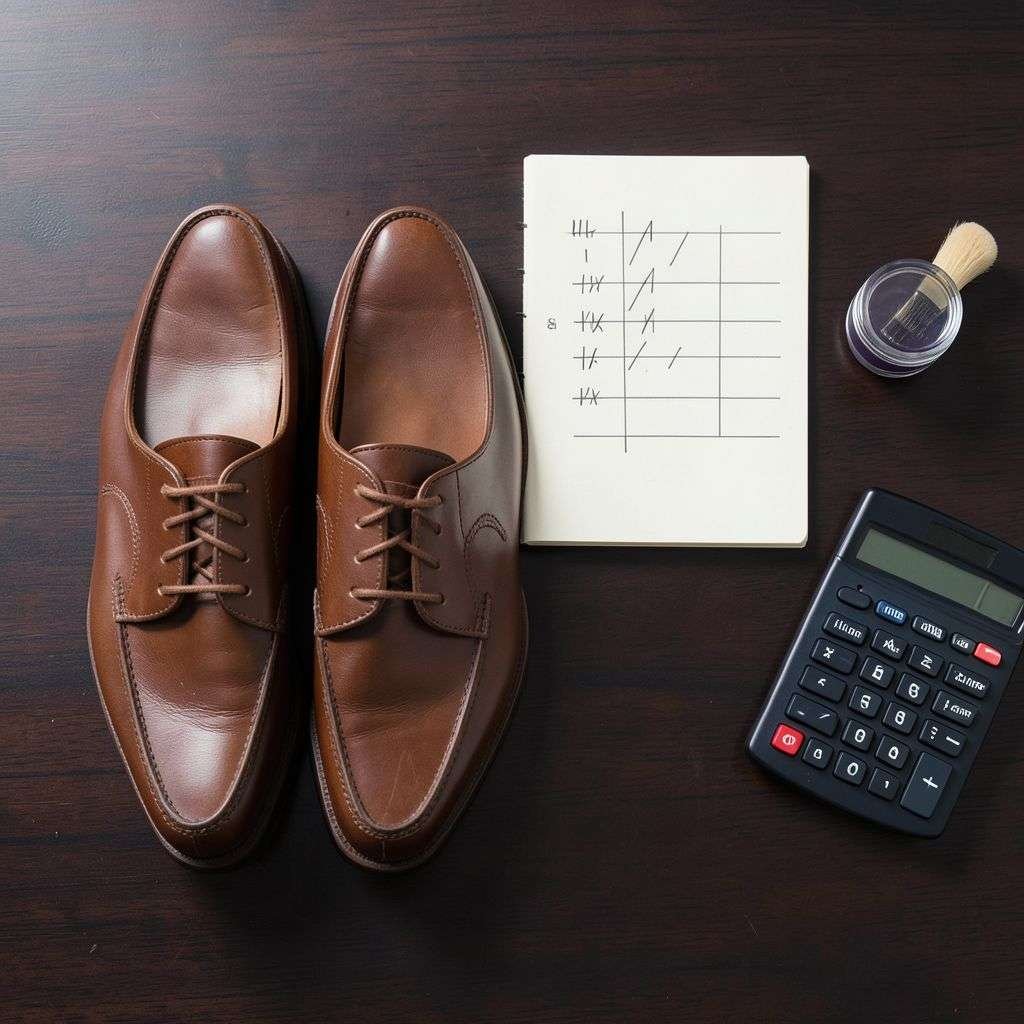
Price formal shoes for men the way you price any capital expense: cost per use. Construction decides that number. Goodyear-welted shoes generally outlast Blake-stitched shoes because the welt adds a layer of protection between the sole and the insole. A welted pair can be resoled multiple times, while shoes with cemented construction, where the sole is simply glued to the upper, are generally not designed for a full resole. Gear Patrol also warns that some manufacturers add decorative stitches or welts to cemented shoes so they look welted. Ask how a pair was built before you pay. Want a Quality Pair of Shoes? Consider These Two Factors +2
Run the numbers with your own quotes. This is an illustration, not a market price: a $400 pair plus two $100 resoles totals $600. Wear it 60 times a year for five years, and the pair delivers 300 wears at $2 each. Replace those figures with your actual price and your cobbler’s quote. If you wear formal shoes for men only a few times a year, the same math may favor a cheaper cemented pair, so run it before you spend.
Then follow three rules. First, choose one versatile pair and wear it until the return is clear before you buy a second. Second, confirm the construction before you pay. Third, polish the pair before every pitch, since the Kansas observers tied well-kept shoes to conscientiousness.
Measure the return like any pilot. After your next three investor meetings, note how many pitch days you wore the pair and whether you felt more composed. Slepian’s felt-power finding gives you a reason to track that feeling. Treat the result as your own data, not as proof.
Founders who sweat every other first-impression variable should not leave their shoes to chance. Buy one good pair of formal shoes for men, keep it polished, and let your deck carry the rest of the argument.
Written by Genzwalk.com
External resources (facts verified from these sources)
- Psychology Today, “Step Up: Research Shows You Are Judged By Your Shoes” (summary of Gillath et al., Journal of Research in Personality, 2012): https://www.psychologytoday.com/us/blog/why-bad-looks-good/201806/step-up-research-shows-you-are-judged-by-your-shoes
- Columbia Business School, “The Cognitive Consequences of Formal Clothing” (Slepian et al., 2015): https://business.columbia.edu/faculty/research/cognitive-consequences-formal-clothing
- Columbia Business School Insights, “Suits Don’t Tie Down Creative Thinking”: https://business.columbia.edu/insights/chazen-global-insights/suits-dont-tie-down-creative-thinking
- Association for Psychological Science, “Dressing for Success: From Lucky Socks to the Red Sneaker Effect” (Bellezza, Gino, Keinan, 2014): https://www.psychologicalscience.org/news/minds-business/dressing-for-success-from-lucky-socks-to-the-red-sneaker-effect.html
- Harvard Business School Working Knowledge, “The Manager in Red Sneakers”: https://www.library.hbs.edu/working-knowledge/the-manager-in-red-sneakers
- Gear Patrol, “Want a Quality Pair of Shoes? Consider These Two Factors” (shoe construction): https://www.gearpatrol.com/?p=178395